Pheasants and grouse · Gamebirds
Rock Ptarmigan
Link copied.
Lagopus muta
Link copied.
How to recognize it
-
About 35 cm long
-
White in winter, with black outer tail feathers
-
In the breeding season, male grey above, with white wings and underparts
-
Found on bare rocks and open tundra
About the species
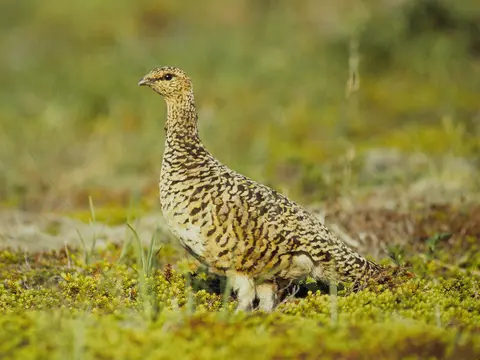
Across the year, its plumage shifts from white to mottled grey-brown, blending with snow or bare ground. In winter, the outer tail feathers stay black against the white; males also have a dark line beside the eye. In summer, speckles break up the grey-brown body, though the flight feathers stay white.
During the breeding season, males trade low, guttural snores and rattles, then chase rivals over open ground or in quick flights. A displaying male beats his wings rapidly, glides upward with his tail fanned, and calls as he descends. These contests usually stop short of physical fights.
It lives on dry tundra and rocky, often barren mountain slopes, sometimes close to the snow line. It feeds on plant buds, leaves, seeds and berries; chicks also eat insects. Most populations stay in one area, while those in the far north may range more widely.
Where to find
-
In dry, rolling tundra, look for Rock Ptarmigan feeding among low plants.
-
On bare slopes near the snow line during the breeding season, listen for males' guttural calls and watch their ground and aerial displays on open leks.
-
During incubation in Iceland and Greenland, look for feeding among plants on lower ground — they descend there for better food.