Grassbirds · Perching birds
Common Grasshopper Warbler
Link copied.
Locustella naevia
Link copied.
Voice
Song
Song
Song
How to recognize it
-
12–14 cm long, slim, with a wedge-shaped tail
-
Streaked olive-brown back, yellowish-white underside
-
Skulks along the ground through dense grass, rarely takes flight
-
Steady, high reeling trill, like a grasshopper’s chirring
About the species
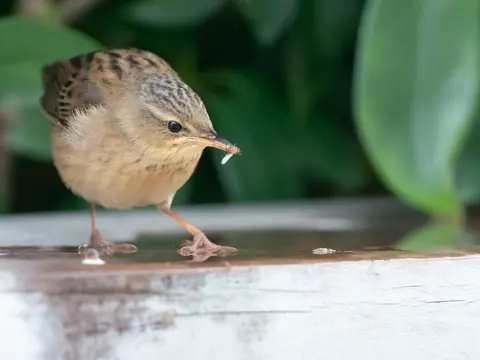
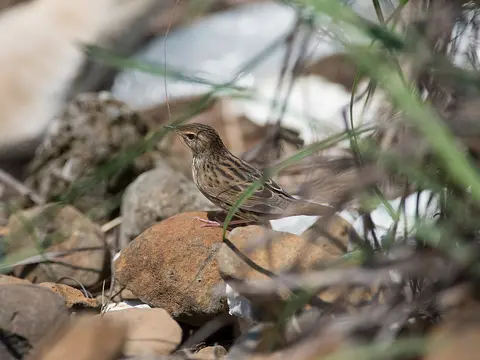
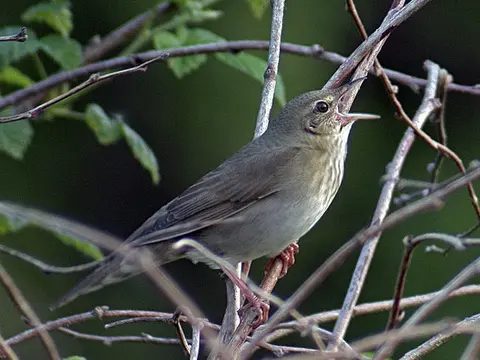
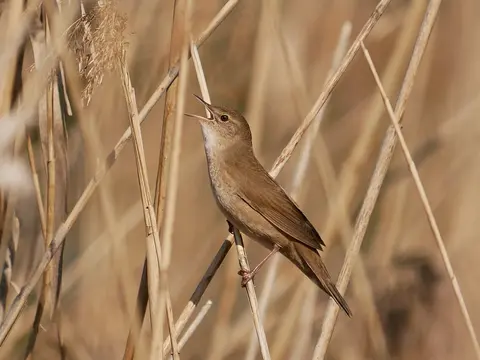
When it pauses above the grass, its olive-brown upperparts show dark streaks against pale cream-buff underparts. The breast and flanks carry a few darker marks, while the belly is mostly plain. A faint pale line behind the eye and fine bars on the reddish-brown tail add smaller details; its legs are yellow-brown. Males and females look alike.
Most of the time it stays low, threading through dense growth on foot or along stems, and soon slips back under cover if it takes flight. Its song is a sustained, high "zrrrr" trill, often heard at dawn or dusk and sometimes at night. The sound carries far, but can be difficult to pinpoint.
It breeds in rough grass and low scrub, including damp ground near water, overgrown hedgerows, heaths and woodland clearings. Insects and other small invertebrates, including spiders, make up its food. It breeds across temperate Europe and migrates to tropical Africa for winter, mainly south of the Sahara.
Where to find
-
During the breeding season, at the edge of a wet meadow or fen, listen at dawn or dusk for a long reeling trill from a prominent perch.
-
During the breeding season, in rough grass with scattered shrubs, watch for movement low in the cover: the Common Grasshopper Warbler creeps through dense growth, runs along the ground and stems, and rarely flies.
-
During the breeding season, in tangled hedgerows or on heath, watch for brief flits from twig to twig; after landing, it often raises and fans its tail.