Grassbirds · Perching birds
River Warbler
Link copied.
Locustella fluviatilis
Link copied.
Voice
Song
Song
Song
How to recognize it
-
Body length 14.5–16 cm
-
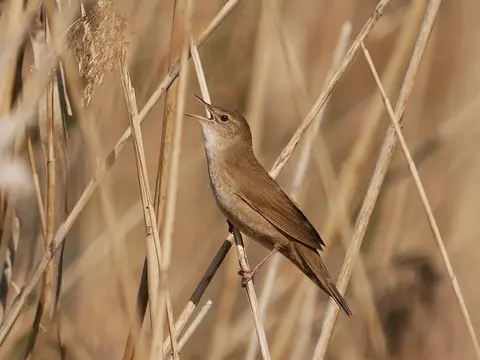
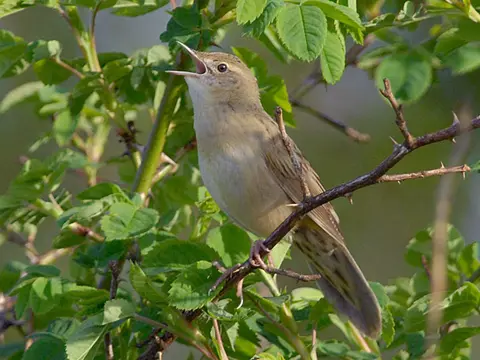
Olive-brown upperparts; dull whitish underparts with diffuse dark streaks on throat and breast
-
Broad, rounded tail; pale tip to the undertail
-
Skulks through dense grass; male’s monotonous, vibrating song often heard in the evening: "zerr-zerr-zerr"
About the species
Olive-brown above and pale grey-white below, the River Warbler has an earthy look. Faint, blurred streaks cross its throat and chest, and its broad tail is darker underneath, with pale tips. A light eyebrow and pale ring around the eye are easiest to catch when it slips briefly into view.
A repeated, mechanical "zer-zer-zer" can carry on for long spells, especially at dusk and in the early morning. A male may sing from a tree, then drop straight into dense foliage when he stops. It creeps through grass and low plants, usually staying under cover.
Dense deciduous growth near rivers, marshes, and bogs is its breeding habitat, with shelter overhead and room to move below. It searches among the ground, grass, and shrubs for insects, spiders, and other small animals. After breeding across eastern and central Europe, it migrates south to spend winter in southern Africa.
Where to find
-
During the breeding season beside a river, listen in dense deciduous growth for the River Warbler's monotonous reeling at dusk or early morning; a singing male may perch 5–8 m up in a tree.
-
At the edge of a floodplain or swamp forest, watch after a song for a male dropping like a stone from a tree and vanishing into thick cover.
-
On a damp meadow or bog beside shrubs, look for movement through grass and on the ground as it searches for insects, arachnids and other small prey.