Grassbirds · Perching birds
Savi's Warbler
Link copied.
Locustella luscinioides
Link copied.
Voice
Song
Call
Song
How to recognize it
-
About 14 cm long
-
Uniform dark reddish-brown upperparts
-
Whitish-buff underparts, throat without streaks
-
Monotonous insect-like reeling song, often at dusk
About the species
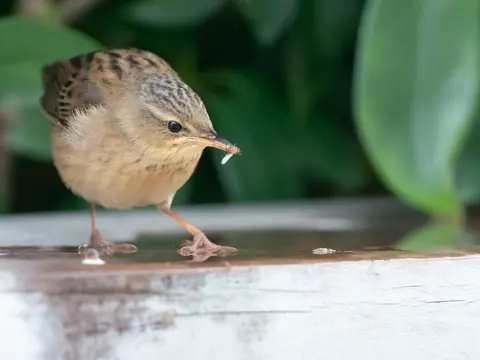
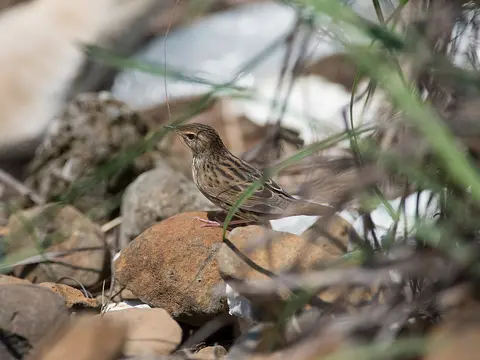
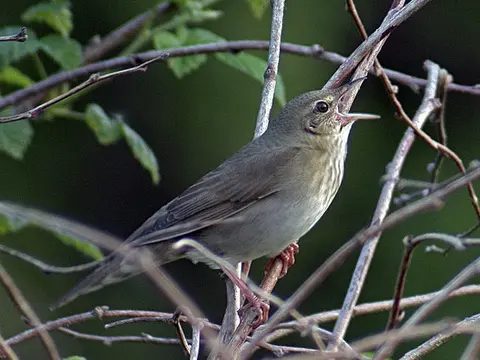
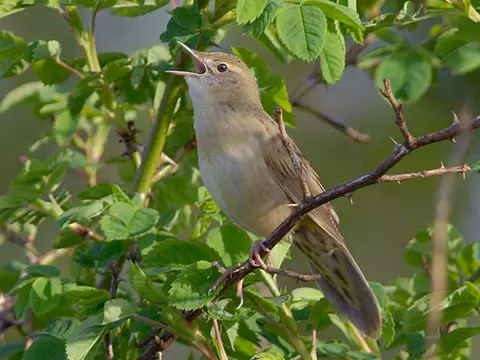
Among the reeds, a reddish-brown back gives way to a pale buff throat and belly. A short, faint eyebrow barely marks the face, and the slender bill is brown. As it slips between stems, its broad, rounded tail shows against the plain, unstreaked plumage.
It usually stays among dense reeds, flitting through the stems and climbing upward. When it sings, it may climb to a reed top; its quick, low trill sounds like a cricket’s, sometimes starting with a few soft ticks. The song is often heard at dusk.
It breeds in reed beds, marshes and lagoons, often among sedges and scattered bushes. It searches the stems for insects and spiders, then migrates to Africa for winter, where it also uses marshy wetlands.
Where to find
-
During the breeding season, Savi's Warbler uses long reedbeds around marshes and lakes; often at dusk, listen for its steady, insect-like song from a reed tip.
-
In dense reeds, watch for a climb up the stems as it searches for insects, often using its wings to help.
-
At lagoons and marshes with reeds, sedges, and scattered bushes, watch for quick flashes through the stems — it is seldom seen on open ground.