Grassbirds · Perching birds
Lanceolated Warbler
Link copied.
Locustella lanceolata
Link copied.
How to recognize it
-
11.5–12.5 cm long; short neck and tail
-
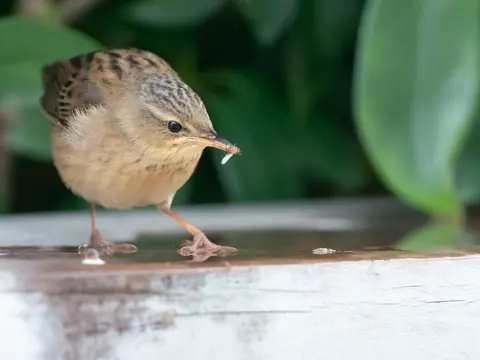
Adults: brown back; pale underparts with small dark spear-shaped streaks; sexes alike
-
Juveniles yellower below
-
Creeps through grass and low foliage; a monotonous mechanical insect-like reel, often at dusk
About the species
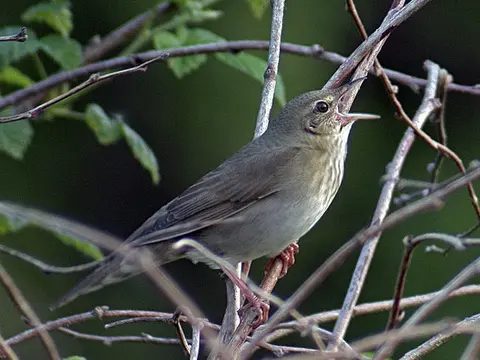
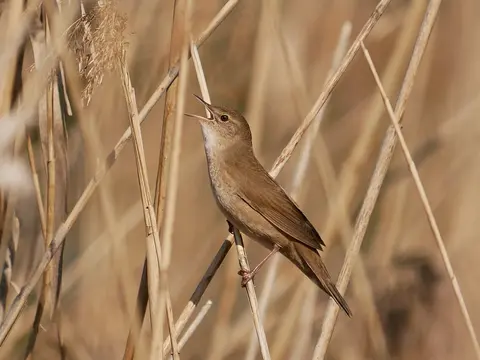
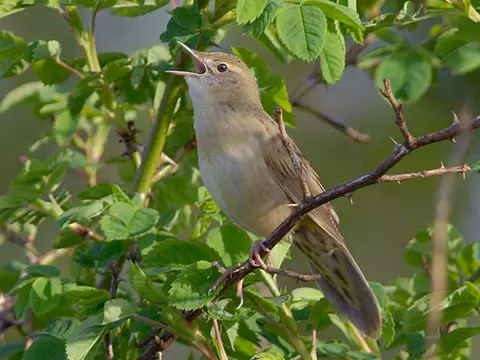
Brown above and pale grey-white below, it has a finely streaked back and narrow dark marks across the breast that continue beneath the tail. Those pointed marks are the strongest contrast in its otherwise subdued plumage. The sexes look alike, while young are yellower underneath.
It keeps low, creeping through grass and low foliage, and may only give itself away when it sings. At dusk, its song runs in a steady mechanical trill, much like an insect’s buzz. It nests on the ground in a tussock of dense grass.
During the breeding season, it uses grassland with thicker shrubs or scattered trees, often around bogs, wet clearings and other spots near water. It feeds on insects and their larvae. It breeds from northeastern Europe across northern Asia to Japan, then migrates to Southeast Asia, where it also turns up in rice fields.
Where to find
-
In breeding areas, listen at dusk on damp meadows by water for a steady, insect-like reel.
-
At bogs and wet clearings with dense shrubs, look low: the Lanceolated Warbler creeps secretly through grass and low foliage.
-
In wintering areas of Southeast Asia, check rice fields — you may spot concealed movement close to the ground among the plants.