Reed warblers · Perching birds
Common Reed Warbler
Link copied.
Acrocephalus scirpaceus
Link copied.
Voice
Song
Song
Song
How to recognize it
-
About 13 cm long
-
Brown upperparts, yellowish-white underparts
-
Agile hopping and climbing through dense reeds
-
Slow, chattering song, "jit-jit-jit"
About the species
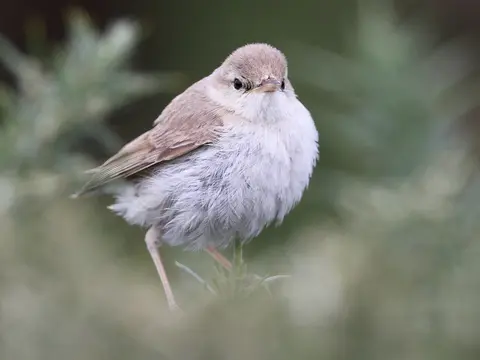
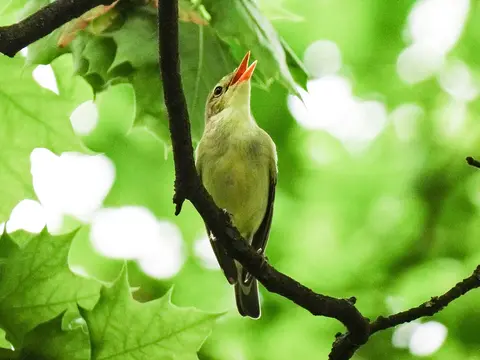
Brown above and buff below, the Common Reed Warbler has an unmarked back and a pale throat. Its low, flat forehead sits above a strong, pointed bill. Young plumage is richer buff below, while males and females look alike.
It climbs and hops among reeds. Its song is a slow, chattering “jit-jit-jit,” mixed with whistles and mimicry; short calls include “charr” and “chirrak.” At breeding grounds, males arrive two or three weeks before females.
It breeds in reed beds, usually with bushes nearby, and also uses damp scrub. Insects make up most of its food, though it sometimes takes berries. European breeders migrate to sub-Saharan Africa for winter, while populations across large parts of Africa stay year-round.
Where to find
-
During the breeding season, look among the reeds at a pond for the Common Reed Warbler hopping and climbing through the stems in search of insects and spiders.
-
Beside a river or lake edged with dense reeds and waterside shrubs, listen for a slow, chattering song from within the cover.
-
During nesting season, watch reedbeds over water from a distance: both parents feed their young in low nests among the stems.