Reed warblers · Perching birds
Booted Warbler
Link copied.
Iduna caligata
Link copied.
Voice
Song
How to recognize it
-
Smaller than a sparrow
-
Brownish-grey back and white belly
-
Pale eyebrow, dark bill tip
-
Short wings, plump body and square-tipped tail
About the species
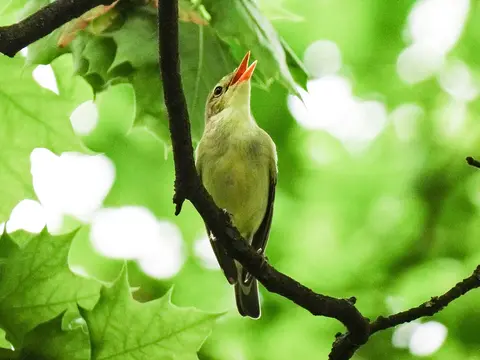
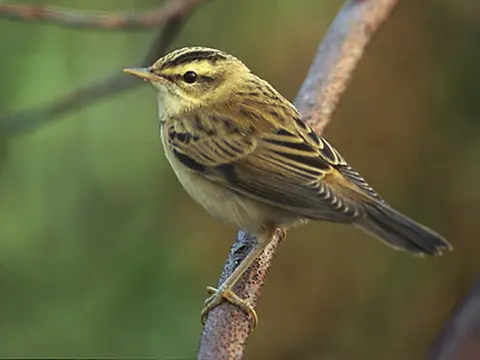
Muted grey-brown above and pale below, the Booted Warbler has a soft, low-contrast look. A pale stripe over the eye gives its face a clear mark, while the short bill ends in a dark tip. Its tail has a square end, visible as it slips through cover, and the rest of its upperparts are plain.
It builds a cup-shaped nest in thick growth, on or close to the ground, where stems and leaves screen it from view. Both parents take turns incubating the eggs. The young leave the nest before they can fly, and their parents continue feeding them for a time.
It breeds in open, scrubby places such as bushy meadows, woodland edges and young growth, feeding mainly on insects. After breeding, it migrates south to winter across the Indian subcontinent, reaching Sri Lanka. During migration, it may also turn up in western Europe.
Where to find
-
In bushy meadows from May to early July, Booted Warblers nest in thick grass — look close to the ground.
-
At forest edges and in young woodland, check low shrub branches: nests may sit close to the ground.
-
In dense willow thickets during the breeding season, parents take turns incubating the eggs and feed the chicks after they hatch — watch for activity near a low, hidden nest.