Reed warblers · Perching birds
Sedge Warbler
Link copied.
Acrocephalus schoenobaenus
Link copied.
Voice
Song
Call
Alarm
How to recognize it
-
11.5–13 cm long
-
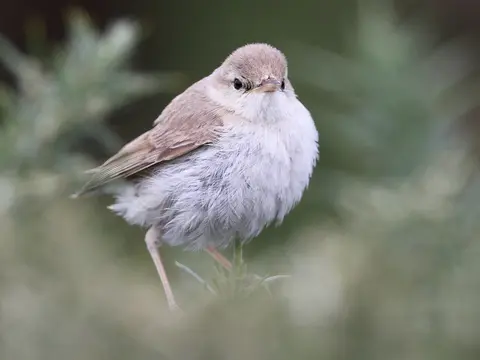
Brown back and wings with dark streaks, pale underparts
-
Pale eyebrow above a dark, streaked crown
-
Hops between stems, picking insects from underneath leaves
About the species
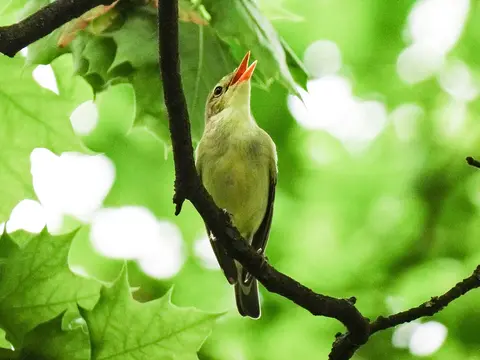
Brown streaks cover its back and wings, while the underside is pale and the rump a warmer, plain brown. A pale stripe above the eye contrasts with the dark streaks on its crown, and the pointed bill is set against a pale throat. Males and females share the same coloring.
It hops from stem to stem in low vegetation, picking insects from beneath leaves or catching them in flight. The male sings a rushed chatter of phrases in changing order, sometimes mimicking other species; short "chirr" or "kerr" calls can quickly become a rattling alarm. He stops singing once he has found a mate.
It feeds mainly on insects, picking them from low vegetation or catching them in flight, and also takes berries. It breeds in reedbeds, wet scrub and damp fields across Europe and western and central Asia, then heads south in late summer to winter in sub-Saharan Africa.
Where to find
-
During the breeding season, listen for a fast, chattering song from a bush along a hedgerow.
-
In dense reeds and rushes, watch the Sedge Warbler hop between stems and pick insects from the undersides of leaves.
-
Along cultivated fields, watch for flights from one perch to another in pursuit of flying insects.