Larks · Perching birds
Crested Lark
Link copied.
Galerida cristata
Link copied.
Voice
Song
How to recognize it
-
18–20 cm, smaller than a pigeon
-
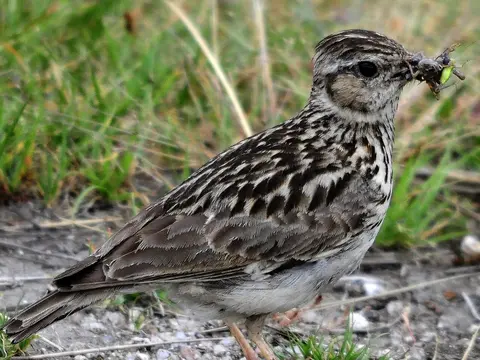
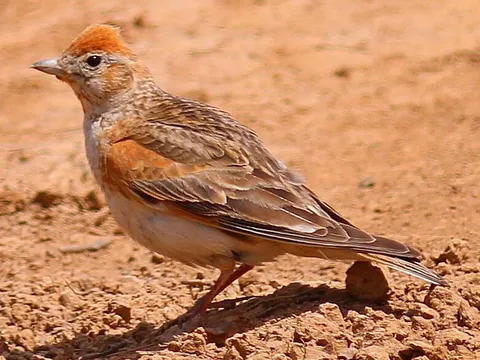
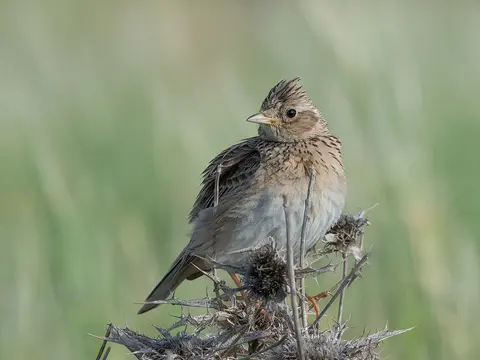
Brown with dark streaks, whitish underparts
-
Crest on the head, visible even at rest
-
Undulating flight; call "tsee-tsee"
About the species
The Crested Lark is an unobtrusive inhabitant of open places, easy to remember by its crest and its habit of staying on the ground. It looks neat and compact, and moves quickly without much fuss.
It often sings from the ground, from a stone, or from a fence, and sometimes in the air. Its call sounds like “tryudri-trie”, and the song is very melodic, with imitation of other songbirds.
It favors dry open meadows, field edges, roadsides, industrial areas, ports, and towns. It feeds on seeds from wild grasses and other plants, and adds small animals in winter. In most places it stays through the cold season, though some in the northeastern part of its range migrate.
Where to find
-
On dry wastelands and industrial edges, where bare soil, sparse grass, and low weeds remain, Crested Lark feeds right on the ground.
-
Along road verges and railway embankments, notice the quick runs across dusty patches and sudden takeoffs from a lump of earth or stone.
-
On flat roofs, walls, and ledges of old buildings — especially when a melodic call or song comes from a stone, fence, or parapet.
-
On open dry lawns and other large undeveloped patches in the city, where it stays low and hunts small beetles and other invertebrates in the grass.