Larks · Perching birds
White-winged lark
Link copied.
Alauda leucoptera
Link copied.
How to recognize it
-
Body length 17–19 cm
-
In flight: black wing edge, broad white band, chestnut rest of the wing
-
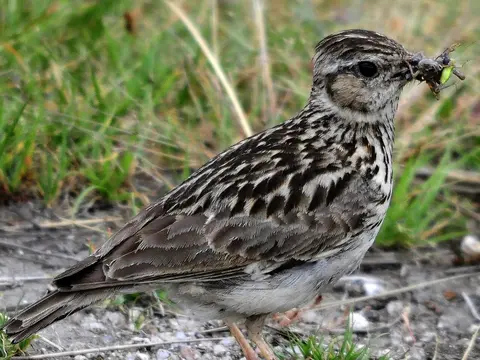
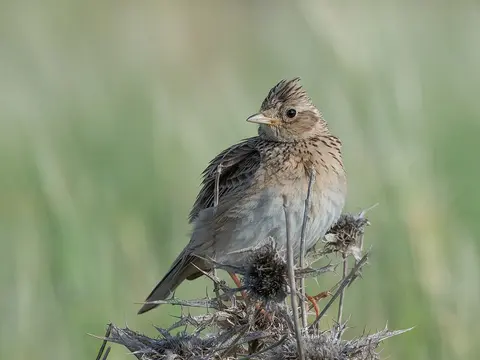
Grey back with dark streaks, pale underside
-
Soft, drawn-out call, somewhat mewing
About the species
At rest, the White-winged lark is grey-brown above, marked with dark streaks, and pale underneath. The adult male has a chestnut crown, while the wings are chestnut with white inner feathers and black outer ones. Those broad white patches flash most clearly in flight.
It sings from the ground or during a fluttering display flight, stringing distinct trills together in a song reminiscent of a Eurasian Skylark’s. Its call is a soft, drawn-out “virr-virr,” and it sometimes imitates calls of other species. Outside the breeding season, it gathers in flocks.
It lives in dry, open steppe and plains, including wormwood grassland and salty flats. Seeds make up its diet, with insects added during the breeding season. It is partly migratory: populations move southwest in winter, reaching southern Ukraine and northern Iran, while those at the southern edge of the breeding range mostly stay year-round.
Where to find
-
In dry, open steppe, listen for the white-winged lark singing from the ground.
-
From May to July, listen for song during a low display flight over open steppe.
-
In winter, scan the steppe and forest-steppe of southern European Russia for flocks.