Rails and coots · Cranes and rails
Eurasian Moorhen
Link copied.
Gallinula chloropus
Link copied.
Voice
Call
Alarm
Call
How to recognize it
-
Pigeon-sized, dark brown-black overall
-
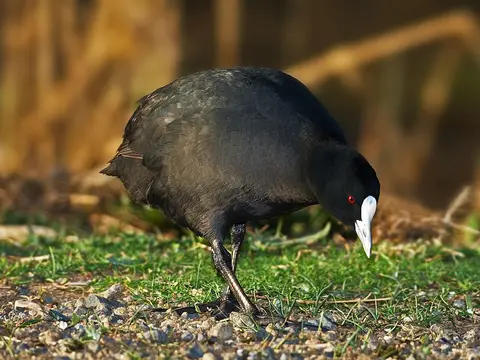
Bright red forehead shield, red bill with yellow tip
-
White flank streaks, white undertail with a black band
-
On water, nodding head, quick swimming, sharp wingbeats
About the species
Eurasian Moorhen has a secretive, restless feel, as if it’s always halfway into the reeds. Its dark body and bright red forehead shield make it stand out without needing to show off.
It spends much of its time along the water’s edge, stepping quickly through shallow margins, slipping through vegetation and bobbing its tail as it goes. The voice is just as striking, with sharp, harsh calls and a softer warning note when it feels uneasy.
It likes marshes, ponds, canals and other well-vegetated wetlands, and it can settle into city parks too. It feeds on plant matter as well as small aquatic animals, and while many populations stay put, those in freezing regions move to milder places for winter.
Did you know?
-
Chicks dive from day one
Moorhen chicks swim and dive easily and nimbly from their first days of life.
Link copied.
-
Boundary settled by combat dance
Moorhens settle neighbourly territorial disputes with a peculiar combat dance — a required ritual between nesting pairs.
Link copied.
Where to find
-
Along reed-fringed pond edges or canal banks — early in the morning, Eurasian Moorhen often feeds in the shallows with its head dipping under.
-
By a quiet river with dense overgrown banks — at dusk it slips onto open water and glides along with a flicking, raised tail.
-
In older city parks with a broad pond and shrubs at the waterline — the sharp “kik-kik” call carries from the reedbed.
-
On floating leaves near a sheltered inlet — it walks across water plants in short steps and picks at them with its bill.