Rails and coots · Cranes and rails
Spotted Crake
Link copied.
Porzana porzana
Link copied.
Voice
Call
Song
Song
How to recognize it
-
Body length 19–22.5 cm
-
Adults: blue-grey breast, dark barring and white flank spots
-
Short, straight yellow bill with a red base
-
Spring breeding call, a repeated "hwuit, hwuit"
About the species
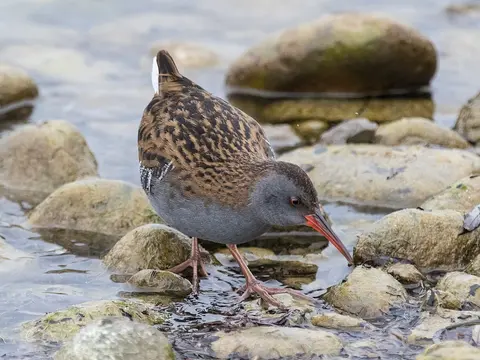
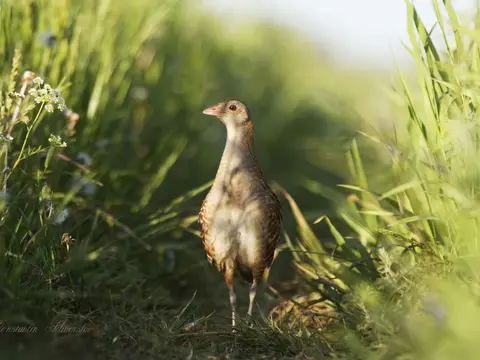
Brown upperparts and a blue-grey breast give the Spotted Crake a dark, earthy coloring. White spots break up its flanks, crossed by fine dark bars, while its short yellow bill has a red base. Green legs and long toes show as it steps through the shallows.
It moves quickly through wet grass and shallow water, threading between dense stems rather than crossing open ground. In the breeding season it stays hidden, but after dark gives a repeated "hwuit, hwuit" whistle that carries through the marsh. It probes mud with its bill and also picks small prey out by sight.
Marshes and sedge beds across temperate Europe and western Asia are its breeding grounds, with nests tucked into wet vegetation. It feeds mainly on insects and other aquatic animals, searching along muddy shallows. Most populations migrate south for winter, reaching Africa or Pakistan.
Where to find
-
On April and May nights at shallow freshwater marshes with dense emergent vegetation, listen for the repeated "hwuit, hwuit" whistle.
-
At the reed and sedge edge of a quiet river backwater, look for a Spotted Crake probing mud and shallows with its bill for food.
-
During migration on a wet meadow beside a marshy shore, watch for quick movements through the grass — the chance of spotting one is better then.