Rails and coots · Cranes and rails
Water Rail
Link copied.
Rallus aquaticus
Link copied.
Voice
Call
Alarm
Call
How to recognize it
-
23–26 cm long
-
Long red-orange bill, olive-brown back
-
Adult: blue-grey underparts, black-and-white barred flanks, white undertail
-
High-pitched, piglet-like squeal
About the species
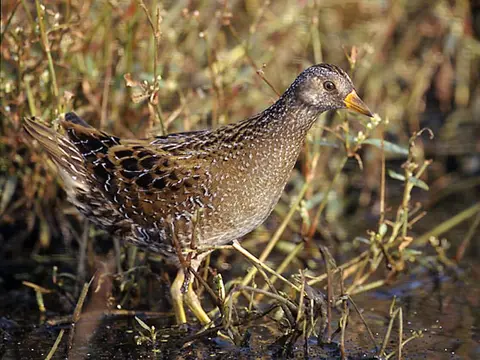
Olive-brown above and slate-grey across the head and breast, the Water Rail has dark streaks along its back and broad black-and-white bars on its flanks. Its long, slightly down-curved bill is bright red, while the short tail often flicks up to show a white underside. These colors can be hard to pick out in thick reeds, but the barred flanks are easier to spot.
It keeps to cover, slipping through dense stems and freezing when caught in the open; if it needs to move quickly, it crouches and runs. Its call begins with a series of grunts, rises to a high piglet-like squeal, then ends in more grunts, and can be heard throughout the year.
It lives in marshes and other wetlands with tall, dense growth around still or slow-moving water. It picks insects, worms, snails and other small invertebrates from mud and plants, eating more berries and plant stems as winter approaches. Northern and eastern populations move south for winter, while those in warmer parts of the range stay year-round.
Where to find
-
In dense reed and cattail beds beside still or slow water, listen for a piglet-like squeal — the Water Rail often gives itself away with calls from cover.
-
Along muddy shallows among waterside plants, watch for quick runs as it searches for worms and insects.
-
On frosty days, check ditches beside wetlands — the cold may push it into open ground, where it can dash back into cover.