Cormorants · Cormorants and gannets
European Shag
Link copied.
Phalacrocorax aristotelis
Link copied.
How to recognize it
-
Body length 68–78 cm
-
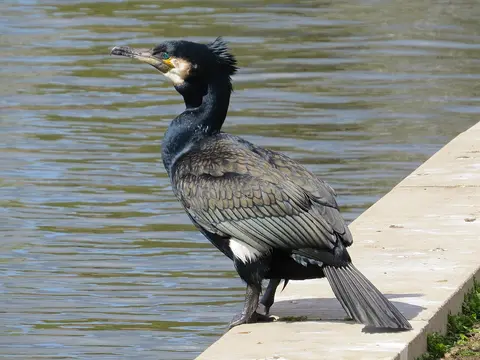
Black plumage with an olive-green sheen; no pale patch on cheek or throat
-
Adults in spring and summer with a small forward-curving crest; bare yellow skin at the bill base
-
Seacoasts; very rare on inland waters
About the species
At rest, its feathers look black, but sunlight brings out a green metallic sheen across the head and back. A yellow patch shows at the throat and around the base of the bill, and adults grow a small crest in the breeding season, with its tips curling forward. Its long tail trails behind as it flies low over the water.
Usually quiet, it gives a low, hoarse rasp when alarmed at the nest or while feeding its chicks. It catches fish underwater, often searching close to the seabed, and jumps forward before diving to gain momentum. Cautious on land, it spends much of its time swimming or at sea.
Look for it along rocky shores and offshore islands, where it nests in cracks, on ledges, or in small caves. Fish make up its food, and it usually stays near its breeding coast through winter; only the northernmost populations move farther south.
Where to find
-
During the breeding season on rocky sea coasts, look for the European Shag at crevices and ledges, where adults feed their chicks.
-
At the shore, watch the sea surface for a brief leap before a dive for fish; prey is often sought near the seabed.
-
In winter on fish-rich coasts, scan the nearshore water for a dark silhouette swimming close to land.