Cormorants · Cormorants and gannets
Pygmy Cormorant
Link copied.
Microcarbo pygmaeus
Link copied.
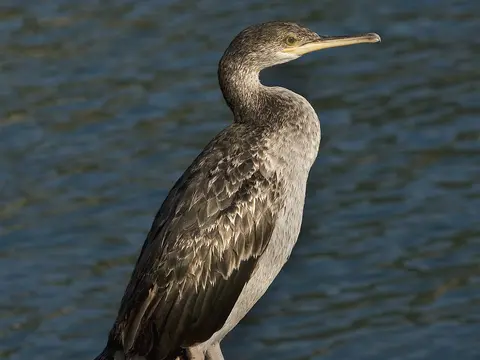
How to recognize it
-
48 cm, smaller than the Great Cormorant
-
Black plumage with green sheen, scattered white marks
-
Reddish-brown head
-
Usually by water, sits upright, often spreads wings to dry
About the species
Often seen perched upright on a branch, reed stem, or other low lookout by the water, the pygmy cormorant spends a lot of time drying its feathers with its wings held open. It swims well, dives easily, and flies with quick, light wingbeats.
It is usually quiet, but in the breeding season it becomes noisy and gives duck-like calls. It often feeds in groups and takes mainly small fish, moving between feeding spots as the water changes.
Look for it around reed-filled pools, lakes, river deltas, and flooded fields with trees or shrubs nearby. It uses dense vegetation for nesting and may also use trees, willows, or small floating mats. In winter it shifts to estuaries and other saltier waters, and it stays in southern Europe and western Asia, with northern populations moving south.
Where to find
-
Along quiet canals and pond edges with reeds — especially where willows and shrubs grow by the water; in the morning it often sits on a branch with wings spread, drying its feathers.
-
On reedy riverbanks and sheltered inlets, where small fish are easy to catch; look for repeated dives and then a pause on a snag or pier post.
-
In city backwaters and around little reed islets — often in small groups, gliding low over the surface and scanning the water before diving.
-
At flooded edges of ponds and marshy margins — foraging right beside the reeds, then lifting off in a low, fast flight along the bank.