Cormorants · Cormorants and gannets
Great Cormorant
Link copied.
Phalacrocorax carbo
Link copied.
Voice
Call
Call
Call
How to recognize it
-
Body length 70–102 cm
-
Black plumage with a green-purple sheen; bare yellow, sometimes red, throat patch at bill base
-
In flight, neck and legs held out; frequent, heavy wingbeats
-
After feeding, dries wings while perched with them partly spread
About the species
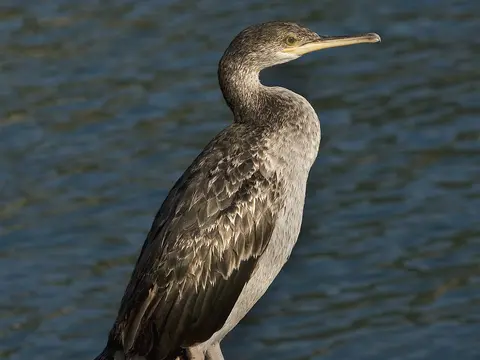
Most of its plumage is glossy black, with bronze-green wings and a purple sheen across the body. A long tail trails behind, and the hooked bill meets a bare yellow patch at the throat. In breeding season, white feathers appear on the thighs and around the head and upper neck.
It catches fish by diving, pushing itself underwater with its webbed feet. Most of the time it is quiet, but nesting colonies fill with low, throaty calls such as “korororo” and “horr”; after feeding, it often rests with its wings partly spread to dry.
Look for it on sheltered coasts and around estuaries, lakes, and rivers, where it hunts fish underwater. In colder northern areas, it moves south when waters freeze; in warmer regions, it may shift locally instead.
Did you know?
-
Buoyancy management
Underwater, the Great Cormorant voluntarily cancels its buoyancy, squeezing the last of the air out from beneath its feathers and bringing its body's specific gravity down to one.
Link copied.
-
Wettable feathers, lethal in winter
Great Cormorants need partially wettable feathers to dive efficiently for fish, but those same feathers kill them in winter — soaked through in cold rainstorms, adults freeze to death in their colonies en masse.
Link copied.
Where to find
-
On an open stretch of river or freshwater lake, look for a Great Cormorant diving for fish.
-
After feeding, scan the shore for groups sitting on the ground or rocks with wings partly spread to dry their plumage.
-
During the breeding season, at wetland shores or sheltered sea inlets, listen for low calls from a colony nesting in trees or on cliff ledges — especially as adults feed their chicks.