Ducks, geese, and swans · Waterfowl
Graylag Goose
Link copied.
Anser anser
Link copied.
Voice
Call
Call
Call
How to recognize it
-
Body length 74–91 cm
-
Greyish-brown plumage, darker head, paler breast and belly, variable black spotting
-
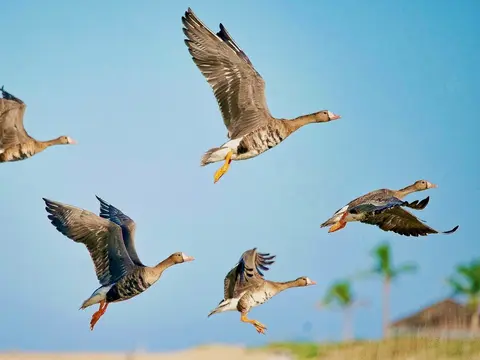
Pale grey forewing and rump visible in flight; orange or pink bill, pink legs
-
Loud cackling call, "aahng-ung-ung", heard on the ground and in flight
About the species
Graylag Geese have grey-brown plumage, with a darker head and a paler breast and belly marked by scattered black spots. Pale grey shows across the forewings and rump when they stretch or fly, while the bill is orange and the legs pink. Adults also have visible folds in the neck feathers, giving the long neck a rippled look.
On the ground or in flight, they call with a loud, cackling "aahng-ung-ung"; a flock can become quite vocal together. They feed in groups and keep family groups together after the young hatch, with both parents caring for them. Many pairs stay together for life.
Look for them around marshes, lakes and wet grassland, and in winter on flooded fields and pasture near water. They graze mainly on grass, but also take crops and water plants. Northern populations migrate south in autumn, while some, including geese in urban areas, stay in the same area all year.
Did you know?
-
Family quarrels race the heart
In greylag geese the pulse spikes hardest not from thunderclaps or traffic noise but during social conflicts with a mate or family member — a sign of emotional engagement, and perhaps empathy.
Link copied.
-
Family parties teach the route
Greylag geese migrate in family parties within the larger flock, so that goslings learn the migration route directly from their parents rather than by instinct.
Link copied.
Where to find
-
In spring, at lakes and ponds fringed with reeds, look for Graylag Geese feeding on water plants.
-
On flooded meadows and pastures beside water, watch a flock grazing on grass.
-
In winter, scan cereal stubble after harvest for flocks gleaning leftover grain in the fields.