Ducks, geese, and swans · Waterfowl
lesser white-fronted goose
Link copied.
Anser erythropus
Link copied.
How to recognize it
-
Body length 53–66 cm
-
Large white forehead patch reaching almost to the crown in adults
-
Broad black bars across the belly
-
Yellow eye-ring in adults
About the species
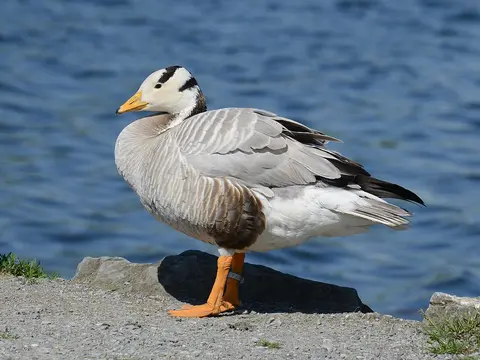
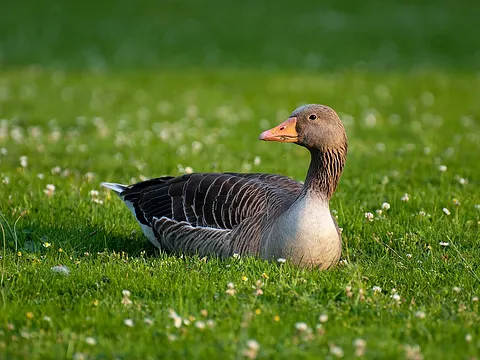
A pale face and belly, crossed by bold black bars, contrast with mouse-grey upper wings and bright orange legs. Its broad white blaze rises from the forehead almost to the crown, while adults have a yellow ring around each eye. It is smaller than the similar greater white-fronted goose, with the eye ring helping distinguish it.
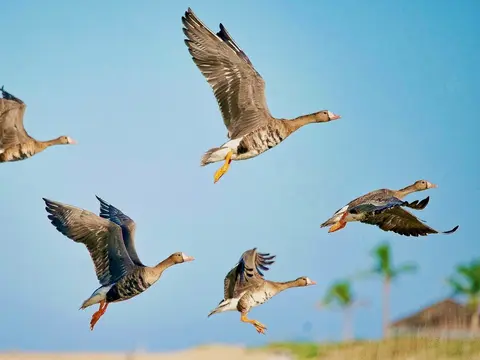
In flight, it gives a short, high squeak. Adults lead their young through grassy and sedge meadows, while nests are tucked among shrubs close to water.
It breeds in the far north, along the tundra edge and across northern taiga and forest-tundra, near rivers, lakes and streams. It feeds on plants, from horsetails, cotton grass and sedges in the north to alfalfa and oats in winter fields. It moves south for winter, with wintering areas around the Black and Caspian seas, across southeastern Europe and as far as China.
Did you know?
-
From 10,000 down to 30 pairs
The Fennoscandian population collapsed from more than 10,000 birds in the early twentieth century to no more than 30-50 pairs by 1986-96.
Link copied.
-
Hunting drove it into the Red Book
The lesser white-front made Russia's Red Book: unchecked hunting collapsed the species' numbers.
Link copied.
Where to find
-
At the tundra edge and in northern taiga, listen for a squeaky call in flight.
-
In northern breeding areas, watch adults lead goslings across sedge-and-grass and mixed-herb meadows.
-
In wintering areas, scan fields for lesser white-fronted geese grazing on alfalfa and oats.