Ducks, geese, and swans · Waterfowl
Greater White-fronted Goose
Link copied.
Anser albifrons
Link copied.
Voice
Call
Call
Call
How to recognize it
-
Body length 64–81 cm
-
Adults: white patch at base of pink bill; juveniles lack the white patch
-
Adults: pale belly with black spots; juveniles lack belly spots
-
High-pitched cackling call, "he-he"
About the species
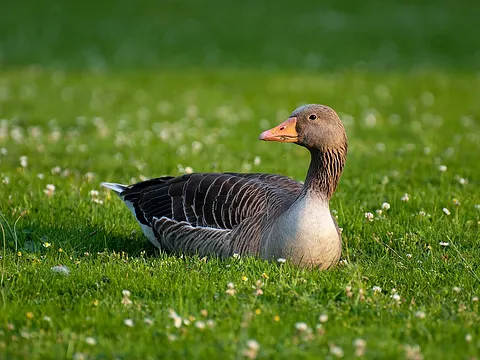
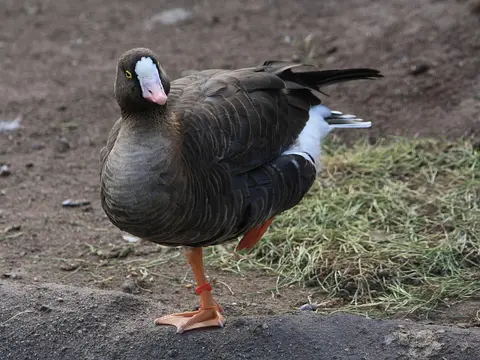
Grey-brown plumage covers the body, with a paler grey breast patterned by dark bars and blotches. A white patch at the base of the pink bill rises onto the forehead, while bright orange legs show beneath. Young geese lack the forehead patch and the dark belly marks seen in adults, leaving their underside plain.
It walks and runs well on land, and is more often seen there than on the water. It usually comes to water to drink, but can dive when threatened. Its high-pitched cackle often breaks into two notes: "he-he."
It breeds on northern tundra and migrates south for winter, reaching parts of North America, Europe and Asia. It feeds on grasses and other plants, algae and berries. In the British Isles, wintering flocks gather at traditional sites on farmland.
Where to find
-
In summer tundra, look from a distance for a greater white-fronted goose near a nest on raised ground: the male guards the area while the female incubates.
-
At the end of August in tundra, watch for large flocks gathering before their autumn migration.
-
In winter, scan traditional gathering sites on farmland in England and Wales for flocks gathered in the fields.