Reed warblers · Perching birds
Great Reed Warbler
Link copied.
Acrocephalus arundinaceus
Link copied.
Voice
Song
Song
Song
How to recognize it
-
About 19 cm long
-
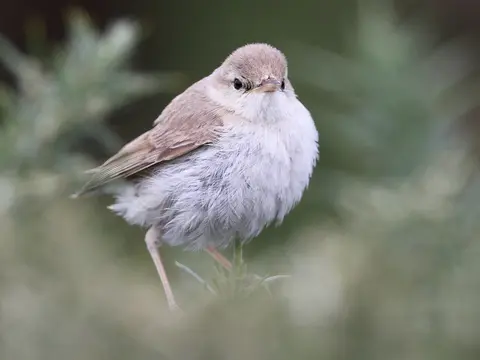
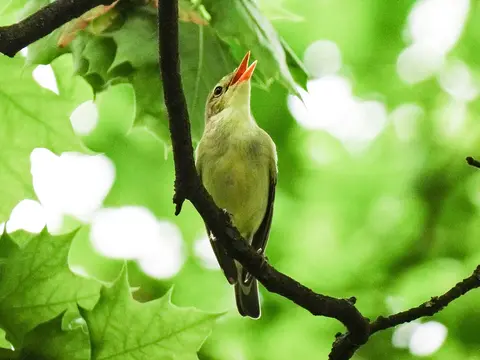
Brown above, yellowish-white below, with a whitish throat
-
Strong pointed bill, faint pale stripe above the eye
-
Loud, far-carrying croaking song, "karr-karr-cree-cree"
About the species
Brown above and buff-white below, it blends into reed stems, with a pale stripe over each eye to break up the plain coloring. Its chin is whitish, its forehead slopes flat, and a strong pointed bill gives the face a clear outline. The sexes look much alike, and the upperparts are unstreaked.
Among the reeds, it climbs and hops from stem to stem, defending a breeding territory with a loud, far-carrying song. The call rattles out as "carr-carr-cree-cree-cree-jet-jet", often mixed with whistles and bits of mimicry. Males use shorter songs in territorial encounters and longer, louder ones to attract females.
It breeds in dense reedbeds, often with bushes nearby, and feeds mainly on insects and spiders, along with small fish, frogs and other small prey. Outside the breeding season, it may also eat fruit. It leaves its breeding grounds for tropical, sub-Saharan Africa in winter, returning in spring.
Where to find
-
From April through September, listen for the loud, far-carrying song of the Great Reed Warbler in dense reeds along a lake or pond.
-
At marshy reed edges, watch for quick hops and climbs among the stems while insects and spiders are being sought.
-
From May to July, listen by reeds over water for alarm calls used to defend hidden nests.