Woodpeckers
Great Spotted Woodpecker
Link copied.
Dendrocopos major
Link copied.
Voice
Alarm
Call
Call
How to recognize it
-
Smaller than a pigeon, contrasting black-and-white pattern
-
White shoulder patches, red patch beneath the tail
-
Red nape patch in males; red crown in young of both sexes
-
Hops up tree trunks; brief drum roll on a dry branch
About the species
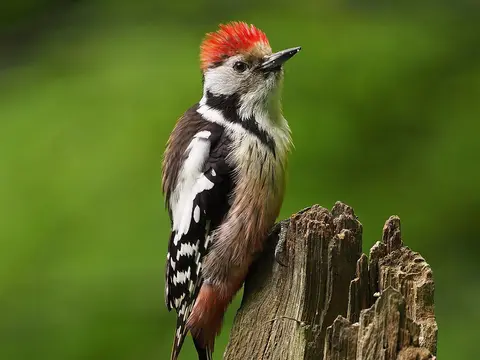
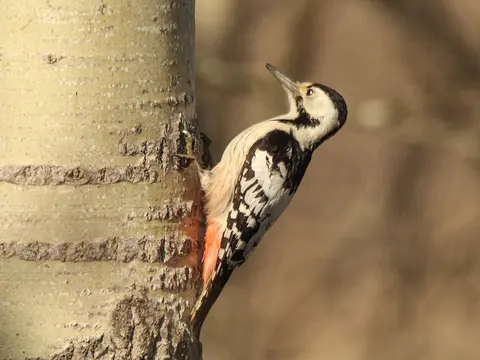
Black and white dominate its plumage, with a red patch on the lower belly and broad white patches on the shoulders. A black stripe cuts across each white cheek and runs toward the neck. In flight, white bars show across the dark wings; males have a red mark on the nape, while juveniles have a red crown.
It climbs tree trunks in short hops, bracing with its stiff tail as it searches the bark. Its sharp "kik" call and quick drumroll on a dead branch carry through the trees; both sexes drum, though males do it more often.
It lives in broadleaf, conifer and mixed woods, and also uses parks and gardens with trees. In spring and summer it picks insects and larvae from bark or chisels into wood for them; in autumn and winter, nuts and conifer seeds become important, and it wedges cones into bark crevices to hammer them open. Across much of its range it stays all year, though northern populations may move when cone crops fail.
Did you know?
-
Irrupts with the crossbills
The great spotted woodpecker is an irruptive migrant tied to spruce — it emigrates in the same poor-cone years as the common crossbill, since both depend heavily on spruce seeds.
Link copied.
-
Raids tree sparrow nests
The great spotted woodpecker is also a nest predator — it raids tree sparrow broods alongside little owls, weasels, stoats and martens.
Link copied.
Where to find
-
In old city parks, listen for a sharp "kik"; from mid-January through late June, and sometimes in September, listen for a brief drumroll on a dry branch.
-
In woods in spring and summer, watch for brief pauses on an upward climb along a trunk, followed by pecks at bark crevices for insects.
-
In conifer woods in autumn and winter, look for a cone wedged in a trunk crevice and being hammered open for its seeds.
-
In the cold season, look for a Great Spotted Woodpecker visiting feeders near homes for seeds and suet.