Grebes
Horned Grebe
Link copied.
Podiceps auritus
Link copied.
How to recognize it
-
31–38 cm long
-
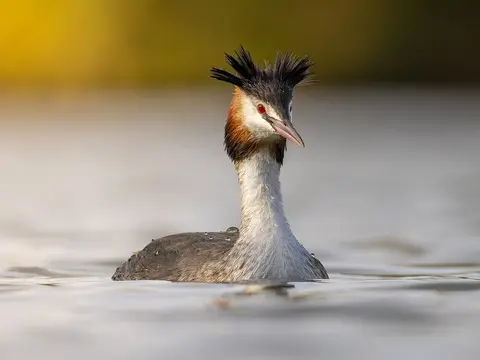
In spring and summer, black head with orange-red tufts above and behind the eyes; chestnut neck and sides
-
In autumn and winter, pale overall, dark grey cap, white front of neck
-
On the water, head held slightly tilted back
About the species
In breeding plumage, the Horned Grebe has a black head and back, chestnut-red neck and sides, and a white belly. Fan-shaped black feathers flare at the cheeks, while orange-yellow tufts rise above and behind the eyes. Its straight bill has a pale tip. In winter, its neck and cheeks turn white, contrasting with a dull black-grey crown and back.
It dives underwater to feed, then surfaces with prey and turns larger fish headfirst before swallowing them. During breeding, its loud, nasal "aaarrh" drops in pitch and ends in a trill; outside that season, its calls are subdued. It also swallows its own feathers from an early age, forming a plug in the stomach that holds fish bones during digestion.
It breeds on shallow freshwater ponds, marshes and lake edges with plenty of emergent plants. During migration, it pauses at lakes, rivers and marshes, then moves to coastal waters for winter; some gather on inland lakes. Its summer diet includes aquatic insects and other small invertebrates, shifting toward fish and crustaceans in winter.
Where to find
-
At small, shallow freshwater ponds and lake edges with emergent plants and open water, look for a Horned Grebe diving for aquatic invertebrates.
-
During migration, check lakes, rivers and marshes for insects caught in the air just above the water — these are stopover sites along the route.
-
At small lakes and their shallow bays during the breeding season, listen for a loud, nasal call that drops in pitch and ends in a trill.
-
In winter, scan marine bays, estuaries and sandy beaches for dives after fish and crustaceans.