Grebes
Red-necked Grebe
Link copied.
Podiceps grisegena
Link copied.
How to recognize it
-
40–50 cm long in the nominate subspecies
-
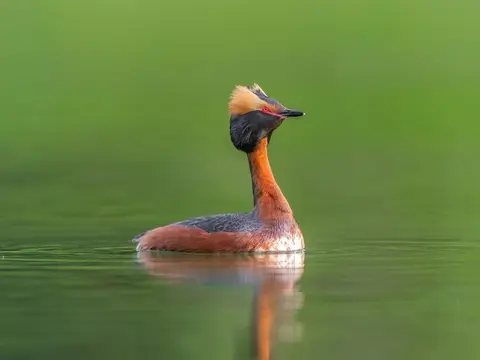
In breeding plumage: black cap, pale grey cheeks, rusty-red front of neck
-
In winter: dusky grey plumage, cap merging into grey face, pale front of neck
-
Dives swiftly when alarmed rather than taking flight
About the species
On breeding lakes, a red-necked grebe has a rusty-red neck beneath a black cap, with pale grey cheeks set against a dark back and white underparts. Its long, straight bill is mostly dark, with a yellow patch at the base. In winter, the red fades and the head turns dusky grey, while a pale crescent curves around the back of the face.
It swims low and dives quickly, disappearing beneath the surface when danger comes; on land, its far-back legs make walking awkward. In breeding season, pairs give a loud, wavering "uooooh" call, sometimes together, but they are mostly quiet the rest of the year. Newly hatched chicks spend much of their first days riding on a parent’s back.
It nests on shallow freshwater lakes, marshes and ponds, usually among reeds and other water plants, where it builds a floating platform. It dives for fish and aquatic insects, and also takes insect larvae, crayfish and molluscs; in winter, fish make up most of its food. Most migrate to coastal waters for winter, though some stay on large lakes that remain ice-free.
Where to find
-
During the breeding season, listen for a loud, broken trill from the reeds at small, overgrown freshwater ponds and quiet river backwaters.
-
In winter, watch for dives for fish in the shallow water of sea bays and estuaries, especially near banks and islands.
-
At favored stopover waters during migration, large concentrations sometimes gather — scan the surface for dense groups.