Hawks and eagles
Imperial Eagle
Link copied.
Aquila heliaca
Link copied.
How to recognize it
-
Body length 72–84 cm
-
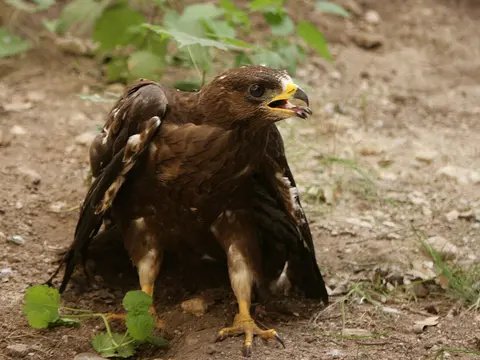
Adults: almost blackish-brown plumage, straw-colored head and pale shoulder patches
-
First-year plumage: pale tawny, with dark streaks
-
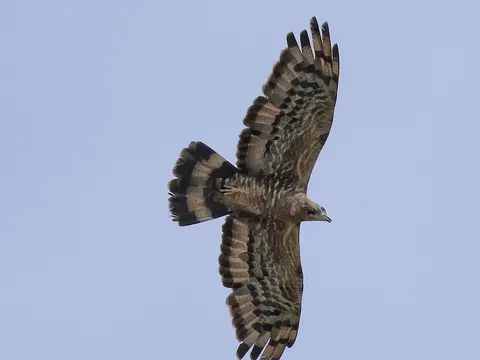
Long broad wings, slow soaring flight
About the species
The Imperial Eagle is a large, dark eagle with long broad wings and a fairly long, straight tail. On perched adults, the pale head and white shoulder patches often stand out most clearly.
It is a calm hunter that usually spends a long time watching from a vantage point or circling overhead. During the breeding season it becomes very vocal, with a deep, harsh call that can carry a long way.
It favors open country with trees nearby, especially steppe, forest-steppe, and woodland edges. It feeds mainly on ground squirrels, voles, hamsters, young hares, and marmots, but also takes other prey and will eat carrion in spring; many populations leave for the south in winter.
Where to find
-
Beyond town, over steppe or forest-steppe dotted with trees, watch the Imperial Eagle soar for a long stretch before a short dive toward prey on the ground.
-
At woodland edges and meadows among woods, scan exposed branches and low rises for a long, motionless watch over the ground.
-
During the breeding season — from March in southern Europe and from late March to April in Russia — listen for harsh calls from pairs circling high over forest-steppe.