Gulls and terns · Shorebirds
Ring-billed Gull
Copied!
Larus delawarensis
Copied!
Voice
Call
Jonathon Jongsma
How to recognize it
-
43–54 cm, size of a pigeon
-
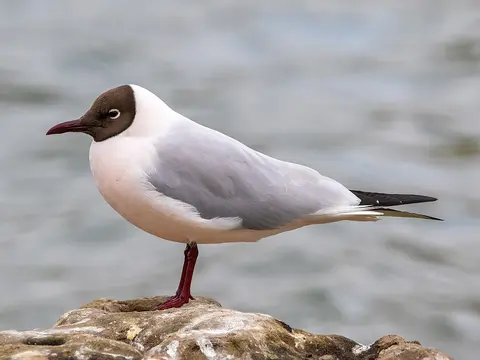
Light gray back and wings, white head and underparts
-
Black wingtips with white mirrors
-
Yellow bill with a black ring near the tip
About the species
The Ring-billed Gull has a clean, streamlined look, with long wings and a short bill that give it a familiar city-and-waterfront feel. Adults look pale and neat rather than flashy, which makes them easy to notice in a crowd.
It is a noisy, social gull that walks, swims, and takes food from the surface. It also forages in flight and does not mind picking up scraps where people leave them behind.
It nests in colonies near lakes and reservoirs, then moves south for winter. Its diet is broad, from fish and insects to carrion, so it adapts well to many places, including towns and landfills.
Where to find
-
Along canal banks, docks, and pond edges — it stays close to the water, picking up crumbs left by people.
-
Near parking lots, markets, and supermarket forecourts — it walks the asphalt, searching between cars and stalls for food.
-
On flat roofs of warehouses and industrial buildings — it gathers in loose colonies and calls from above.
-
By bridges and concrete riverbanks — it drops onto the water, then lifts off again in a low, clean arc over the river.
You might also see



Sources
- eBird — Larus delawarensis Sightings map and full description on eBird
- Wikipedia — Ring-billed gull Encyclopedia article