Falcons
Lesser Kestrel
Link copied.
Falco naumanni
Link copied.
How to recognize it
-
Pigeon-sized
-
Adult male: grey head and tail, rusty back without spots
-
Female and young: rusty upperparts with dark streaks
-
Raspy call, "chay-chay-chay"
About the species
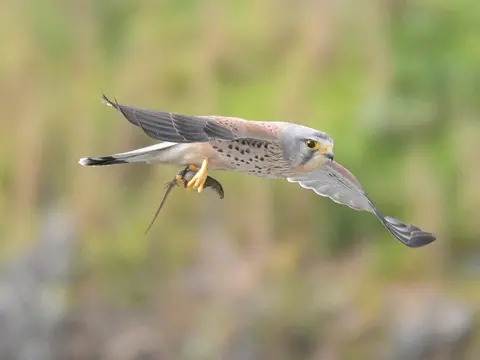
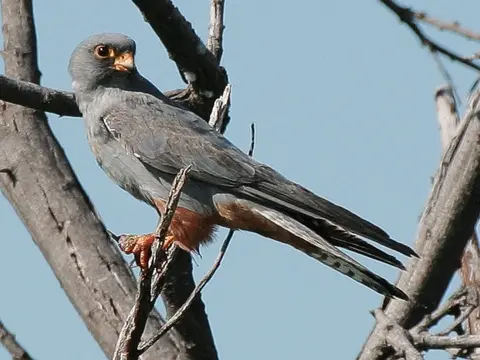
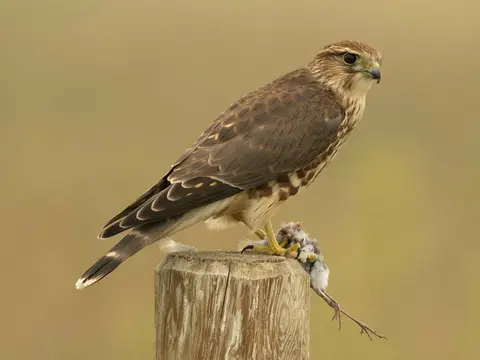
The male's grey head and tail contrast with a warm rusty-red back, grey wing patches, and a pale buff underside. Females are rustier and more streaked, with a pale belly. Where it overlaps with the Common Kestrel, the male lacks dark back spots and the black stripe beside the bill.
At nesting colonies, it calls often with a rough, rattling "chay-chay-chay." It flies low over open ground, hovering when a gust lets it hold position before dropping onto prey. It also chases grasshoppers on foot and catches insects in the air, sometimes hunting in groups.
Dry steppes and semi-deserts with sparse vegetation are its usual breeding grounds, though it also nests in niches in buildings, cliffs, and tree holes. Insects—especially grasshoppers and locusts—make up most of its food, with small rodents and reptiles taken too. It leaves its breeding areas in autumn and spends winter mainly in Africa south of the Sahara.
Where to find
-
In settlements within the breeding range, check niches in stone walls and buildings: colonies are especially noisy before egg-laying and after the young leave the nest.
-
Along steep riverbanks, gullies, and ravines, look toward crevices in rock faces and clay banks — nests are placed there.
-
In dry steppe or semi-desert with sparse vegetation, watch low over the ground: in gusts, look for a brief hover followed by a drop toward prey on the surface.