Reed warblers · Perching birds
Marsh Warbler
Link copied.
Acrocephalus palustris
Link copied.
Voice
Song
Song
Song
How to recognize it
-
About 13 cm long
-
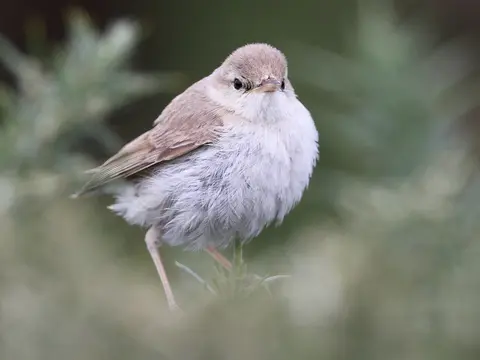
Brown-grey above, yellowish-white below; whitish throat, pointed bill
-
Agile movement through dense vegetation; male song imitating calls of other species
About the species
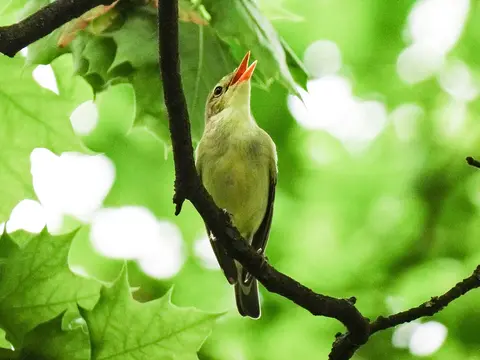
Brown-gray across the back and crown, it has a yellowish-white underside and a pale throat. A fine, pointed bill adds a sharper detail, while males and females share the same muted coloring. The pale throat runs into the light belly, with the darker color kept mostly to the upperparts.
It slips through dense vegetation, keeping close to cover. The male’s song can sound like a rapid mix of calls from other species, with some singers imitating dozens of them. It learns these sounds during its first summer and first winter, then adds no new ones later.
During the breeding season, it uses damp, overgrown places across Europe and western Asia, including nettle patches, willow scrub, and wet field edges. It picks insects from vegetation and also eats spiders and small snails; a few berries join the diet in autumn. After breeding, it travels to southeastern Africa for winter and returns north in spring.
Where to find
-
On overgrown urban brownfield lots where nettles or other tall herbs grow, listen during the breeding season for the Marsh Warbler's loud song, woven with imitations of calls from many species.
-
On damp or seasonally flooded ground among dense herbs, watch for quick pecks as insects are picked from leaves and stems.
-
Near fields by water in Central and Eastern Europe from May through July, watch adults carry food into nests tucked among nettles or crops.