Ducks, geese, and swans · Waterfowl
Mute Swan
Link copied.
Cygnus olor
Link copied.
Voice
Call
Alarm
Call
How to recognize it
-
Much larger than a duck
-
White plumage, orange bill with black at the base and a knob; knob larger in males
-
On water, neck often held in an S-curve, wings sometimes raised
About the species
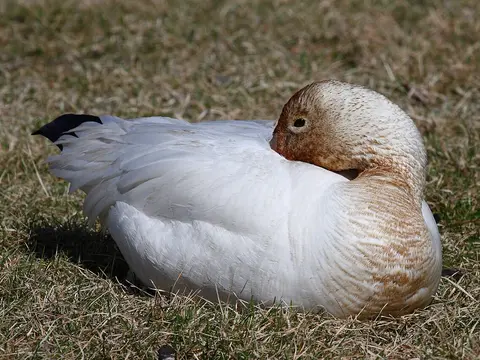
White from head to tail, it has an orange bill edged in black, with a rounded black knob at its base. Its long neck often curves into an S as it swims, and it sometimes holds its wings slightly raised. Feathers on the head and neck can take on a rusty tint from the water.
Quieter than other swans, it still gives rough grunts, hoarse whistles and snorts, and hisses at intruders. When defending a nest, it curves its neck back and lifts its wings halfway. In flight, its beating wings make a rhythmic thrum; tired cygnets may ride on a parent's back.
It uses lakes, ponds, marshes and slow river waters where aquatic plants grow, including park ponds. It pulls submerged leaves up with its long neck, then grazes on land for grass and grain. In northern parts of Europe and Asia, some populations move south for winter.
Did you know?
-
More neck bones than a giraffe
The Mute Swan's neck contains 25 cervical vertebrae — more than any other animal, even the giraffe — giving it the reach to graze submerged plants at depths of 0.5–1.2 m.
Link copied.
-
World's heaviest flying bird
The Mute Swan is the heaviest flying bird in the world, with wild Polish males weighing up to 22.5 kg and laying the largest eggs of any wildfowl at about 340 g.
Link copied.
-
Chicks ride her back, safe from pike
While the brood is being raised, the chicks travel after their mother, riding on her back — so they are protected from big pike, among other things.
Link copied.
Where to find
-
At city-park ponds where mute swans are kept for display, watch them swim with their necks curved into an S-shape, sometimes lifting their wings.
-
At a shallow lake overgrown with aquatic plants, look for long necks reaching underwater for food.
-
On land beside the water, watch them graze on grass and grain.
-
In March, by reeds on a shallow lake or a backwater of a large river far from homes, listen for a male hissing as he defends his territory.