Finches · Perching birds
Pine Grosbeak
Link copied.
Pinicola enucleator
Link copied.
Voice
Call
How to recognize it
-
Starling-sized, stocky-built
-
Adult males: red head and back; females and young: yellow tones instead of red
-
Short, thick, slightly hooked bill; long forked tail
-
Whistled call, "pui-pui-pui"
About the species
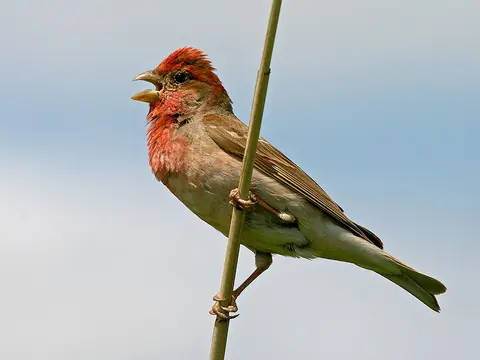
A male Pine Grosbeak is rosy red across the head, back, and rump, with a gray belly and dark wings marked by narrow white bars. The female is more muted, with an olive-yellow head and rump and a gray back and underside. Both have a large bill and a long, forked dark tail.
It forages among trees and bushes, often joining flocks outside the nesting season. Its clear whistles include a repeated "pui pui pui," and its song is a short, musical warble. During breeding, both sexes develop throat pouches to hold seeds for juveniles.
It breeds in boreal conifer forests across northern North America and Eurasia, feeding on seeds, buds, insects, and small fruits such as rowan berries. Most stay near their breeding grounds or move only short distances, but poor fruit crops can send some farther south in search of food.
Where to find
-
In northern taiga conifer woods in June, listen for the Pine Grosbeak's loud, lilting song as males nest.
-
In winter, look for flocks feeding on berries in rowans in the woods.
-
In food-scarce irruption years, some flocks reach southern boreal forests; listen for a wavering whistle as a startled flock takes off — encounters in temperate Europe are rare.