Ducks, geese, and swans · Waterfowl
Pink-footed Goose
Link copied.
Anser brachyrhynchus
Link copied.
How to recognize it
-
Body length 60–75 cm
-
Short bill, pink in the middle with black base and tip; pink feet
-
Grey-brown body, darker head and neck; white rump and vent, broad white tail tip
About the species
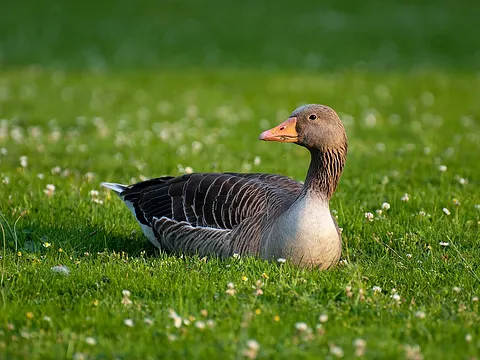
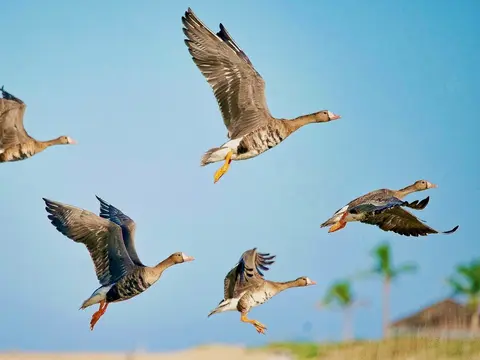
Grey-brown across the body, the Pink-footed Goose has a darker brown head and neck, with a white rump and a broad white tip to its grey tail. Its short bill is black at both ends, with a bright pink band between, and its feet are pink. Pale bluish-grey feathers show across the upper wings when it flies.
Flocks give high-pitched “honk-honk” calls, especially in flight, and large groups can be very loud. On the ground, they graze together in fields, feeding steadily as they move. Large flocks also gather during migration and through the winter.
They breed in Greenland, Iceland and Svalbard, nesting on cliffs or small islets in lakes. In summer they eat tundra plants on land and in water; after moving south in autumn, they winter in north-western Europe and graze on grasses and crops such as oilseed rape, sugar beet and potatoes. Winter flocks feed across farmland.
Where to find
-
In winter, scan farmland in Great Britain, the Netherlands and western Denmark for large flocks grazing on oilseed rape and grasses or gleaning leftover beet and potato leaves and roots after harvest.
-
On autumn and spring passage in Aberdeenshire, look for skeins crossing overhead and listen for loud honking — they are especially vocal in flight.
-
After hatching in the tundra of Iceland and Svalbard, look for broods walking from their nest sites to the nearest lake.