Buntings · Perching birds
Reed Bunting
Link copied.
Emberiza schoeniclus
Link copied.
Voice
Call
Song
Song
How to recognize it
-
13.5–15.5 cm long, about sparrow-sized
-
Male with black head and throat, white collar; female and young lack the black head
-
Brown barred back, white underside with dark streaks on the sides
-
Often by water among reeds
About the species
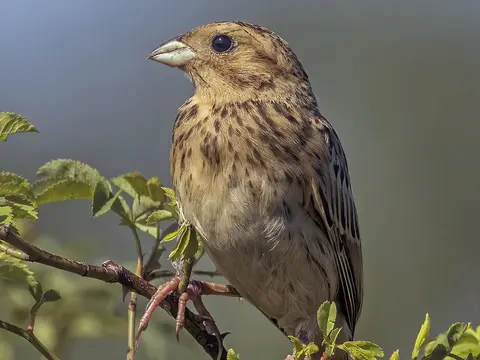
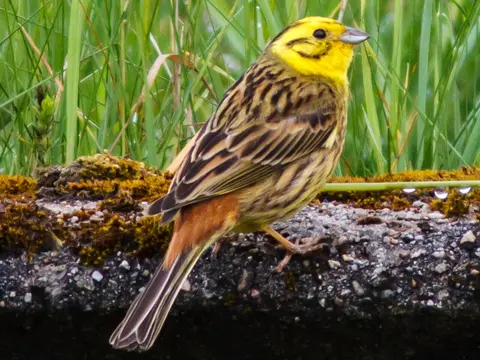
A male Reed Bunting has a dark, almost black head and throat set off by a pale collar, with a white underside and a brown, streaked back. A pale stripe runs back from the bill, and the tail has light outer edges. Females and juveniles are browner, with streaked heads rather than the male’s dark cap.
It moves in quick hops along the ground and flits up through the reeds, sometimes perching on slender stems. Its quieter call is “tsee-tseek,” while the male repeats a short “srip” song. It usually stays in pairs or small flocks.
Look for it in reedbeds and other wet, grassy places around ponds, rivers and lakes, among reeds and willow scrub. It eats mostly seeds, switching to insects while feeding its young. Most populations move south for winter, though those in milder parts of the south and west may stay year-round.
Where to find
-
At ponds and rivers, scan the reed edge for a Reed Bunting perched on a thin stem.
-
On wet meadows and marsh edges, watch for quick hops across the ground among the grass.
-
During breeding, keep your distance from waterside bushes and reed tussocks: adults feed their chicks at nests there.