Buntings · Perching birds
Rustic Bunting
Link copied.
Emberiza rustica
Link copied.
How to recognize it
-
About 15 cm long
-
Summer male: black head, white eyebrow and throat, reddish breast band
-
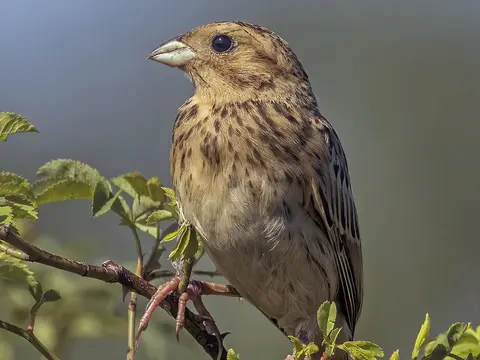
Female: brown head and streaked back, reddish flank streaks, chestnut nape
About the species
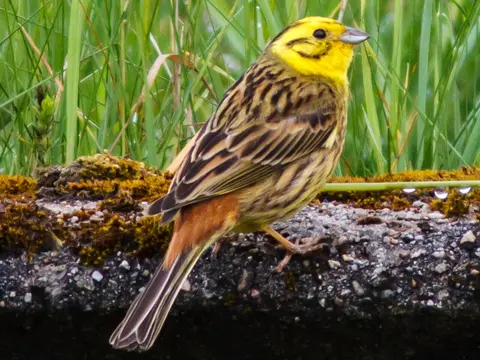
Rustic Buntings have brown, dark-streaked backs, pale underparts, and rusty-red coloring on the flanks. In breeding season, the male has a black head set off by a white eyebrow and throat, with a reddish band across his breast; the female’s face is brown and mottled. A female Reed Bunting is similar, but reddish flank streaks and a pink lower bill help distinguish her.
Its short call is a sharp “zit,” and its song runs “delee-deloo-delee.” It nests in a bush or on the ground, often tucked into low vegetation. Females sing too, though more quietly.
It breeds in wet coniferous woodland across northern Eurasia, then migrates south for winter in East and Southeast Asia, including China, Korea, and Japan. Seeds make up its natural food, with insects added when it is feeding young.
Where to find
-
During the breeding season in northern Eurasia's wet coniferous woods, listen for the Rustic Bunting's short call.
-
In the same woods, look through dense vegetation near the ground: the nest may be on the ground or in a bush.
-
When adults are feeding young, look for them in wet coniferous woods searching for insects.