Buntings · Perching birds
Little Bunting
Link copied.
Emberiza pusilla
Link copied.
Voice
Call
Call
Call
How to recognize it
-
Length 12–14 cm
-
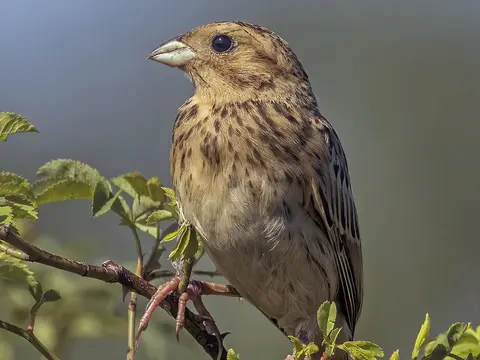
Chestnut cheeks with a white stripe below
-
Black crown stripes and a white eye-ring
-
White underparts with fine dark streaks
About the species
Dark streaks run over the warm brown back and across the pale underside, where they grow finer. Chestnut cheeks are set off by a white stripe beside the bill. A slim white ring circles each eye, while black stripes cross the crown. Males and females look much alike.
Little Buntings tend to stay out of sight. The call is a brief, sharp "zik"; the song rolls through "siroo-sir-sir-siroo."
It breeds across northern Europe and Asia in tundra and open conifer woodland, often where birch or willow grow, and also uses river lowlands and marshy ground. It migrates south for winter to northern India, southern China and northern Southeast Asia. Seeds make up most of its food, while adults feed insects to their young.
Where to find
-
During the breeding season, listen for the rolling song in open conifer woodland with birch or willow.
-
Along low river reaches and marshy ground during the breeding season, look near the ground and in low bushes by water — nests are placed there.
-
In winter, in Bhutan's agricultural habitats at 1,000–2,000 m, look for the few Little Buntings there, picking up seeds.