Ducks, geese, and swans · Waterfowl
Taiga Bean-Goose
Link copied.
Anser fabalis
Link copied.
How to recognize it
-
Body length 68–90 cm
-
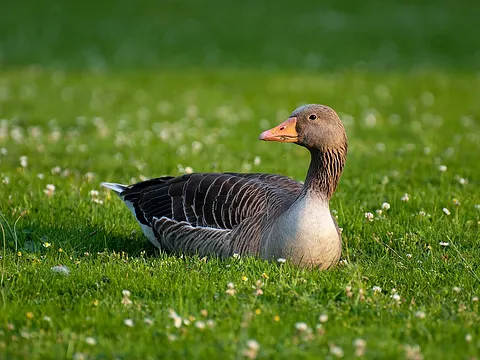
Large, brownish gray, like a greylag goose
-
Black bill with an orange band across the middle
-
Loud honking call
About the species
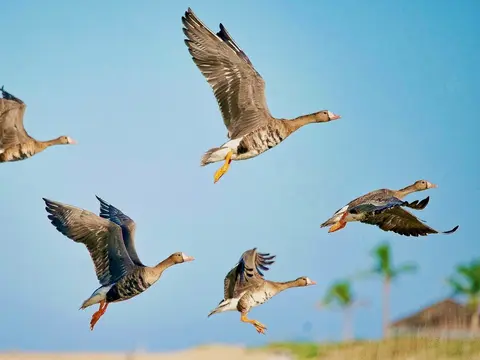
Brownish-grey plumage is darker across the upper wings, while the body stays fairly even in tone. Its black bill has a bright orange band across the middle, and its legs are orange too. Fine pale edges on the dark wing feathers show when the wings are folded.
On land, it walks easily and may even run when alarmed; during the flightless molt, it escapes on foot rather than diving or hiding in the grass. Its call is a loud honk. It grazes through the day, often well away from water, then returns there in the evening.
It breeds across northern Europe and Asia, in taiga and tundra near wetlands, then migrates south to winter in Europe and Asia. Grasses, green shoots and berries make up much of its food; during winter and migration stops, it also feeds on crops such as winter cereals and rice.
Where to find
-
In winter, scan open grain fields and winter crops beyond town — Taiga Bean-Geese graze there during winter stays and migration stops.
-
In a damp river valley with meadows, look for grazing by day and a return to the water in the evening.
-
After the chicks hatch, watch for family groups on damp grassy meadows with shrubs in the northern tundra and taiga.