Ducks, geese, and swans · Waterfowl
Tundra Bean-Goose
Link copied.
Anser serrirostris
Link copied.
How to recognize it
-
68–90 cm long
-
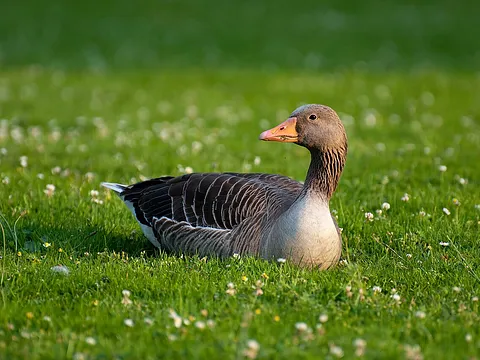
Black bill with an orange band across the middle
-
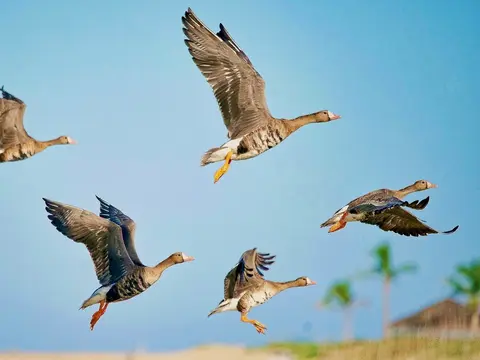
Dark brown upperwing, narrow white feather fringes
-
Loud honking
About the species
Its grey-brown plumage is darker across the upper wings, where narrow white edges trace the feathers. The bill is black at the base and tip, with a bright orange band across the middle; the legs and feet are orange too. Against the muted feathers, those orange markings are the clearest color accents.
The call is a loud honk. In the smaller subspecies, it is higher-pitched.
It breeds in the tundra of northern Siberia, then migrates south to winter in Asia. There are no regular wintering sites, and it is found in small groups among other grey geese.
Where to find
-
During the breeding season on the tundra of northern Russia east of Taimyr, listen for the Tundra Bean-Goose's loud honking.
-
In winter in southern Asia, look for small groups mixed in among other grey geese — there are no regular wintering sites.
-
At British marshes, scan flocks of grey geese: small groups are recorded there, but sightings are local.