Wagtails and pipits · Perching birds
Western Yellow Wagtail
Link copied.
Motacilla flava
Link copied.
Voice
Call
Call
Call
How to recognize it
-
15–16 cm long
-
Slender silhouette, long tail constantly wagging
-
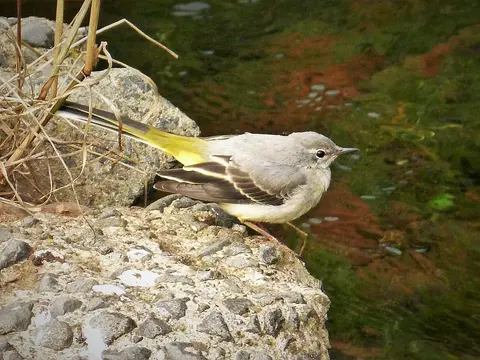
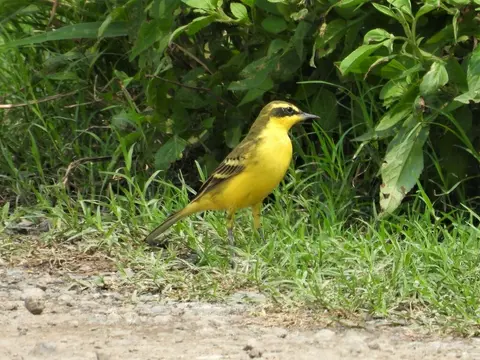
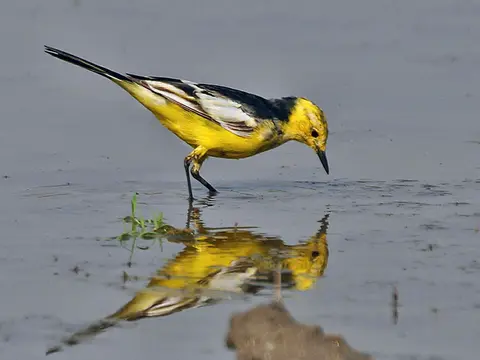
Breeding adult male olive above and yellow below; in other plumages, especially juveniles, the yellow is paler, sometimes whitish
-
High-pitched call, "jeet"
About the species
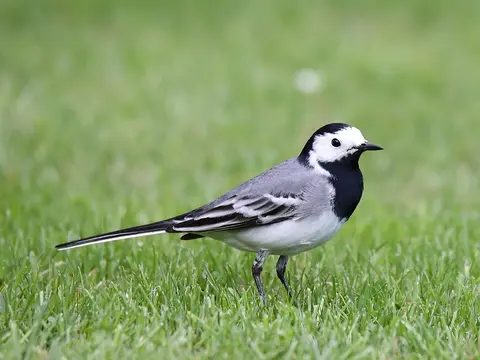
Across a wet meadow, the Western Yellow Wagtail shows an olive-green back above a yellow underside in adult males; females and juveniles can look much paler below. Its long tail keeps bobbing, with white outer feathers visible as it moves. The head pattern varies among populations, and many have a pale stripe above the eye.
It hurries across the ground and flies low over it. A high-pitched "jeet" comes from the grass, where it searches for prey rather than usually catching food in the air.
It breeds in open country near water, especially wet meadows, and nests on the ground among tussocks or dense grass. Its food is small invertebrates, including insects and spiders. Most populations leave their breeding grounds for Africa or southern Asia in winter, while a small population in Egypt stays year-round.
Where to find
-
From April to September, depending on the region, look for the Western Yellow Wagtail atop tall grass in a wet meadow by water outside the city — balancing as its tail wags.
-
In a grassy marsh with shrubs, watch for quick runs over the ground as it searches for small invertebrates.
-
Along an open riverbank, watch for low flights just above the ground.