Wagtails and pipits · Perching birds
White Wagtail
Link copied.
Motacilla alba
Link copied.
Voice
Call
Call
Song
How to recognize it
-
16–19 cm long, slender silhouette
-
Grey back, white underparts and head, black cap and throat
-
Long tail almost constantly wagging
-
Feeds in open spaces, including paved urban areas
About the species
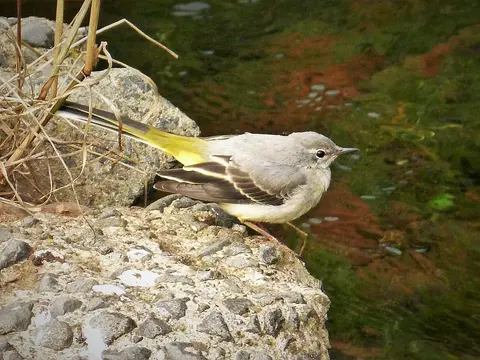
White across the face and underside, it has a grey back, a black cap, and a dark bib at the throat. Its long tail dips and lifts as it walks. Pale cheeks break up the dark head markings, with grey above and white below.
It hunts insects on bare ground, where it can spot and chase them, and keeps its tail almost constantly wagging. Its sharp call is a clipped "chissick"; males also use a more regular song to attract a mate.
It feeds on flies and other small insects in open places, often near water or homes. Paved car parks provide feeding ground too, and nests go into crevices in walls, bridges, and buildings. It may stay year-round in mild parts of its range, while northern European populations migrate to Africa and Asian populations move to the Middle East, India, or Southeast Asia.
Did you know?
-
Cuckoo's most reliable host
The White Wagtail is one of the cuckoo's most reliable foster parents — some females raise a cuckoo chick season after season, never learning to spot the impostor.
Link copied.
-
Daily duels with reflection
Male White Wagtails nesting near houses often attack their own reflection in a windowpane, mistaking it for a rival, and return to these duels every day, never recognising themselves.
Link copied.
-
Rivals unite against a hawk
Male White Wagtails fight ceaselessly over territory during the breeding season, but the moment a hawk appears they band together and jointly attack the predator until it flees.
Link copied.
Where to find
-
On bare paved areas and car parks, White Wagtails search for and chase insects.
-
Along open river and ditch banks, look for foraging on insects and other small invertebrates near the water.
-
During the breeding season, check crevices in walls, bridges and buildings — nests may be tucked into them.