Gulls and terns · Shorebirds
Whiskered Tern
Link copied.
Chlidonias hybrida
Link copied.
How to recognize it
-
24–28 cm long
-
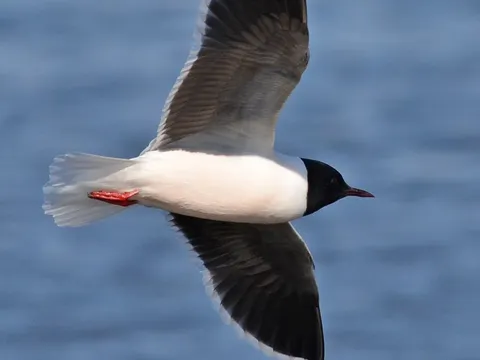
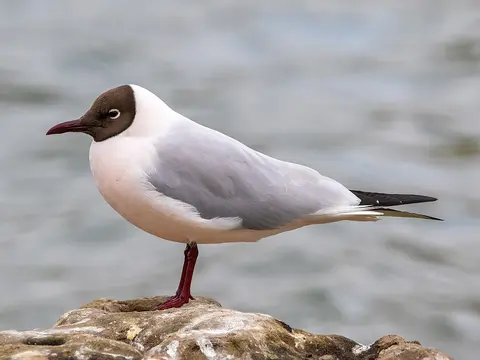
In breeding plumage, dark grey breast and belly, black cap, white cheeks, red bill and legs; in winter, white forehead, much paler grey body, black bill
-
Low searching flight over water with bill pointed down, periodic dives
-
Loud call "krekk"
About the species
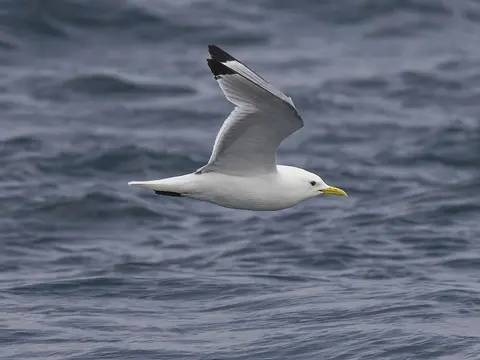
In breeding plumage, the Whiskered Tern is dark grey across its back and underside, with a black cap set off by white cheeks. Its red bill and legs contrast with the dark plumage. In winter, the grey becomes much paler, the forehead turns white, and the bill darkens to black.
Listen for a rough "krekk" or a sharper "ki-ik" over the water. It flies low while searching, bill pointed down, then dips sharply to catch prey, sometimes submerging partway. It makes these dives as it hunts along the water.
It breeds in colonies on inland marshes and around overgrown lakes and rivers. It takes small fish, amphibians, insects, and crustaceans, often dipping into the water as it hunts. European and Asian populations head south for winter, reaching Africa and the Indian subcontinent.
Where to find
-
Over an overgrown waterbody, watch for a Whiskered Tern flying low in a long search, bill angled down, then making an occasional plunge for prey.
-
In Europe, at muddy lakes, rivers, and marshes in late April and May, look for colonies with nests on hummocks or floating plants.
-
At overgrown waters during the breeding season, listen for the loud "krekk" and "ki-ik" calls.