Gulls and terns · Shorebirds
White-winged Tern
Link copied.
Chlidonias leucopterus
Link copied.
How to recognize it
-
Body length 23 cm
-
In breeding plumage, black head, neck and back; white stripe along the front edge of the wing
-
In winter, white forehead and underparts, silvery-gray back, gray-black nape
-
Slow, shallow wingbeats; circles low over water, catches insects in flight
About the species
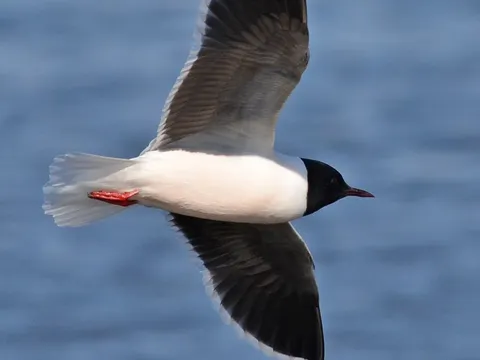
In summer, the White-winged Tern has a black head, neck and belly above a very dark grey back, with mostly white wings that show clearly in flight. A white rump and pale, almost white tail brighten the rear, while its short red legs add a small flash of colour. In winter, much of the black gives way to pale grey or white, though dark markings remain on the head and underwings.
It flies low over water with shallow, unhurried wingbeats, circling and sometimes settling on the surface. Its call is a sharp rattle, sometimes a quieter “kee-kee-kee”; when feeding, it catches insects in the air or picks them from the water rather than diving.
It breeds in freshwater marshes, where nests sit on floating vegetation or on the ground close to water. It eats mainly insects, with small fish less often, then migrates south for winter, reaching Africa, southern Asia and Australia.
Where to find
-
Over shallow freshwater marshes, the white-winged tern flies low, snatching insects from stems, the ground, and the water's surface.
-
During the breeding season, scan shallow marshes from a distance for nests floating among plants or set on hummocks near the water.
-
During migration, watch for large flocks near freshwater — they can number up to 10,000.