Leaf warblers · Perching birds
Willow Warbler
Link copied.
Phylloscopus trochilus
Link copied.
Voice
Song
Song
Song
How to recognize it
-
11–12.5 cm long, smaller than a sparrow
-
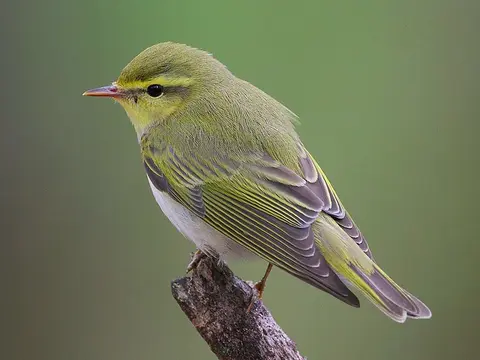
Olive-green back, whitish underside with a yellow wash on the throat and chest
-
Long yellowish eyebrow above a dark stripe through the eye; pale beige legs
-
Short whistling song, about 3 seconds: starts loud, then fades and descends
About the species
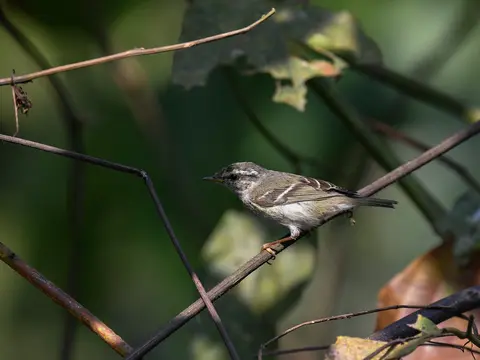
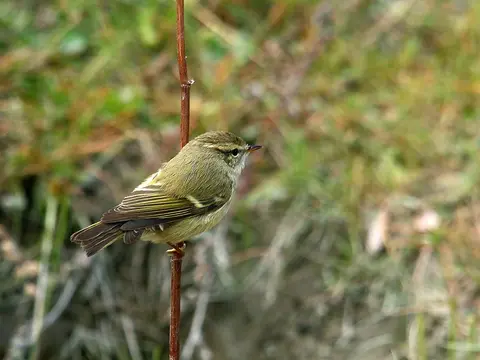
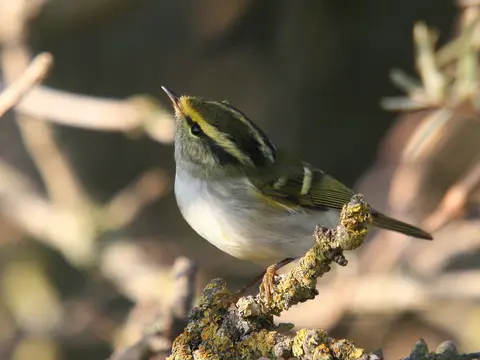
The Willow Warbler is greenish brown above and off-white below, with a faint yellow wash on the throat and chest. A clear yellow stripe runs above the eye, and the folded wings have no bars. Its pale pinkish-yellow legs help distinguish it from the dark-legged Chiffchaff.
It searches through leafy crowns, hopping along branches and making short flights as it picks insects from the foliage. Males sing even while passing through on migration, with a short whistle-trill that rises and then fades to a lower note. A two-note "hoo-eet" serves as a contact call.
Open woodland suits it, especially damp leafy edges, scrub, parks, and gardens with trees and low cover for nesting. It eats insects and their larvae, along with spiders, snails, berries, and fruit. It returns to its breeding range in spring, then migrates south for winter in sub-Saharan Africa.
Where to find
-
In European city parks from April to September, listen for the male's short, descending song from the treetops.
-
At woodland edges and clearings, watch for quick hops and short flights between branches as it hunts insects.
-
In damp woods near streams, scan the dense foliage at different canopy levels, where the Willow Warbler forages among the branches.