Leaf warblers · Perching birds
Wood Warbler
Link copied.
Phylloscopus sibilatrix
Link copied.
Voice
Song
Song
Call
How to recognize it
-
11–12.5 cm long
-
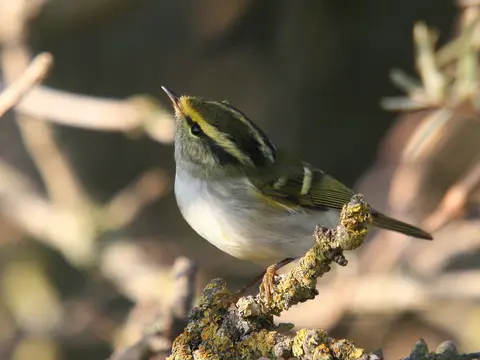
Green upperparts, white belly, yellow throat and eyebrows, yellowish breast
-
Song: high metallic trill that speeds up (2–3 sec); often alternates with 3–5 descending whistles
-
In light deciduous and mixed woods, mostly in the lower canopy and just below it
About the species
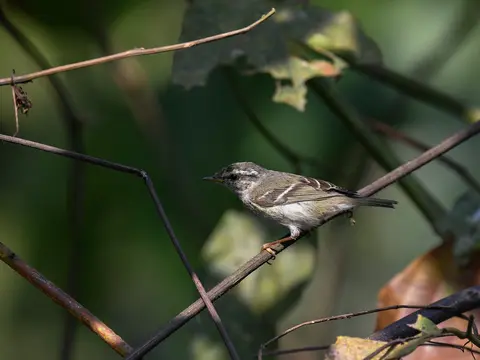
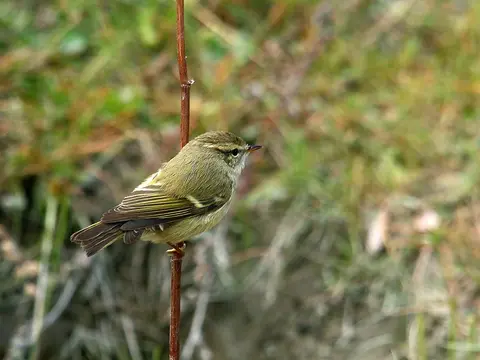
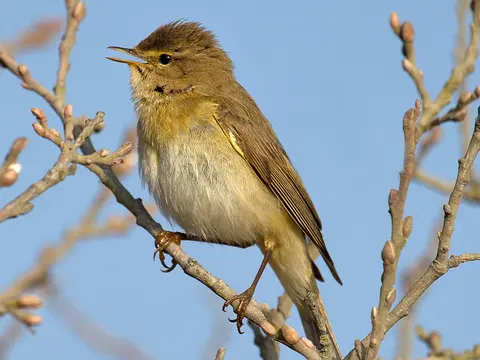
Green across the back and wings, it has a pale underside with lemon yellow on the throat and upper breast. The yellow continues into a clear eyebrow above each eye, and pale edges trace the wing feathers. Its white belly sets off the brighter chest. Males and females share the same coloring.
Among the lower tree crowns, it searches leaves with hops and fluttering flights, pausing to watch for prey. Its song can alternate between a high metallic trill that speeds up and three to five descending "piüü" notes; a shorter "piü" is its contact call.
It breeds in open, shady mature woods such as beech and oak, and also uses parks. The nest is tucked close to the ground in low shrubs. It feeds on insects and larvae, as well as spiders, molluscs and berries, and leaves Europe for tropical Africa in winter.
Where to find
-
In Central European parks from April to September, listen for a high metallic trill that speeds up and gives way to several descending whistles.
-
In old beech or oak woodland with open space beneath the canopy, watch the lower branches: while hunting, the Wood Warbler briefly hovers and flies between spots as it searches for larger prey.
-
On well-wooded farmland, listen for a soft, single piping call among the trees.