Leaf warblers · Perching birds
Greenish Warbler
Link copied.
Phylloscopus trochiloides
Link copied.
Voice
Song
Song
Song
How to recognize it
-
About 10 cm long
-
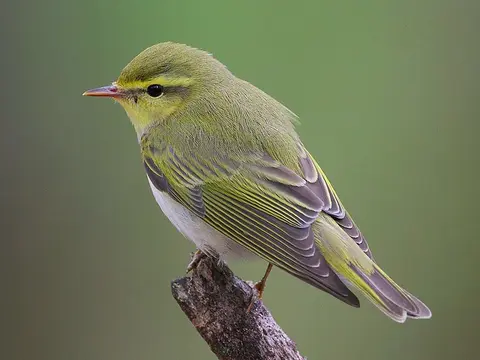
Olive-green back, gray-white underside
-
Long yellow eyebrow above a dark eye stripe, reaching nearly to the nape
-
Two-syllable call, "tslee-vit"
About the species
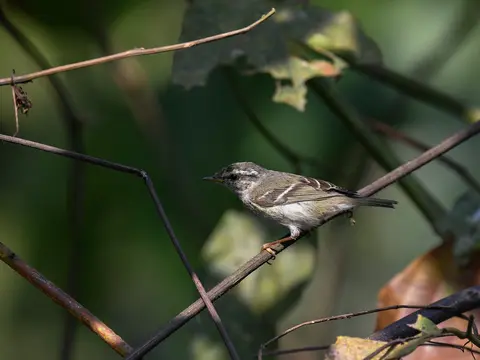
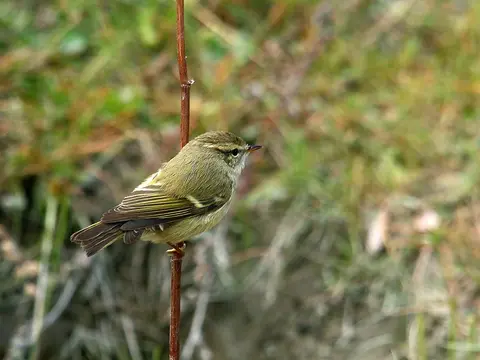
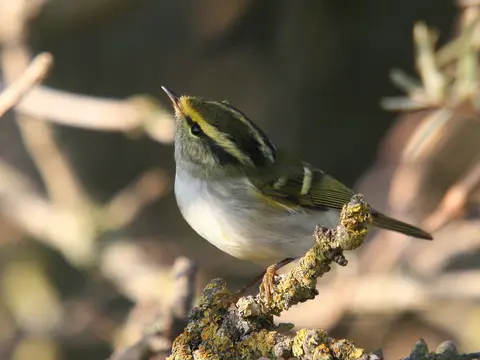
Grayish olive-green above and pale gray-white below, the Greenish Warbler has a long yellow eyebrow over a dark stripe through the eye. The eyebrow reaches nearly to the back of the head, while a small pale wing bar appears in some populations and can be hard to spot. Males and females look alike.
It stays mostly among leaves in the tree canopy, often hidden from view. Its song is a high, jerky trill, broken by a brief pause and sometimes followed by notes that slide down in pitch. The call is a clear two-syllable “tsli-vit”.
Its breeding range runs from northeastern Europe across temperate Asia, where it uses deciduous, mixed, and coniferous woods as well as parks and gardens with trees. It feeds on small insects, spiders, and mollusks. A strong migrant, it travels south for winter in India.
Where to find
-
In city parks and gardens, scan the canopy: the Greenish Warbler stays hidden among the leaves, so its high, jerky song may be easier to hear than to see.
-
During nesting season in a city park, watch old stonework: a quick disappearance into a cavity can reveal a nest site.
-
On a walk beyond town in deciduous or mixed woodland, listen for the short, two-syllable call, "tsli-vit", from the canopy.