Leaf warblers · Perching birds
Common Chiffchaff
Link copied.
Phylloscopus collybita
Link copied.
Voice
Song
Song
Alarm
How to recognize it
-
10–12 cm long; small, dumpy, with a short tail
-
Short, rounded wings
-
In spring, western subspecies: greenish-brown above, off-white below, dark legs
-
Repetitive song, "chiff-chaff"
About the species
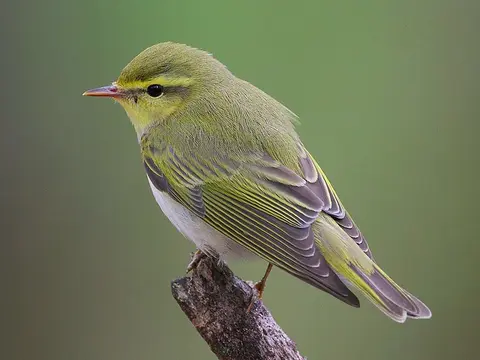
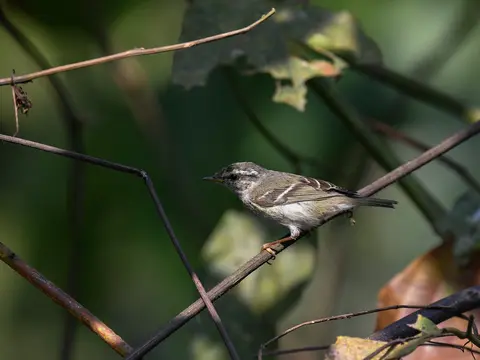
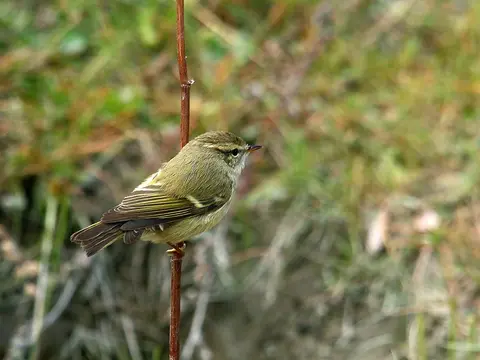
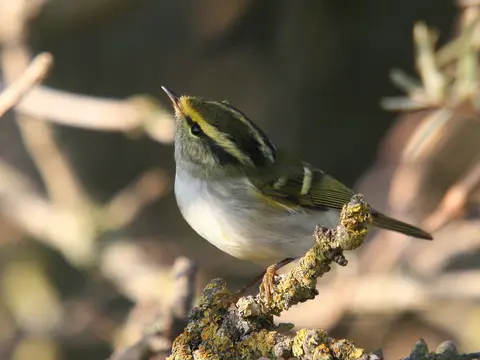
Among leafy branches, the Common Chiffchaff looks greenish-brown above and off-white below, with a short, faint pale stripe over the eye. In spring, a slight yellow wash can show on the flanks, while its fine dark bill and dark legs add sharper points to the muted coloring. Its wings are rounded, and its tail often dips before wagging sideways.
Its name echoes its steady, repetitive "chiff-chaff" song, one of the first signs of spring; its short call is a soft "hweet." It moves restlessly through foliage, sometimes hovering briefly as it picks insects from leaves. During breeding, males defend their territories and sing from a prominent perch.
It breeds in open woodland with taller trees and low ground cover, then uses a wider range of places, including scrub, in winter. Flies and other small insects make up most of its food; many migrate south for winter, while some now remain farther north in western Europe, including in London's mild urban climate.
Where to find
-
In the breeding season, listen for the Common Chiffchaff's song from a high branch in open woodland with taller trees.
-
Beside a woodland glade edged with dense shrubs and young growth, watch for brief hovers near the leaves as it hunts insects.
-
In winter, in the mild urban microclimate of western Europe, watch for insect-hunting among the leaves of waterside scrub.