Lake Volgo
Link copied.
- Species
- ≈ 2 species Source, Species: Community observations: eBird and GBIF
- Best time
- June Source, Best time: Months with the most species, across all years of observations
- ≈ 2 species Source, Species: Community observations: eBird and GBIF
- June Source, Best time: Months with the most species, across all years of observations
Birds year-round
All birds
All year
Within 10 km
About the lake
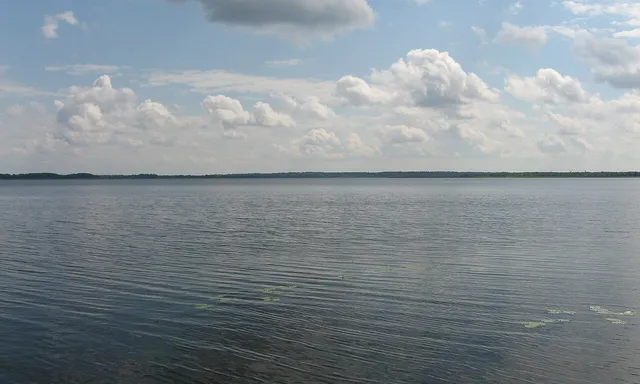
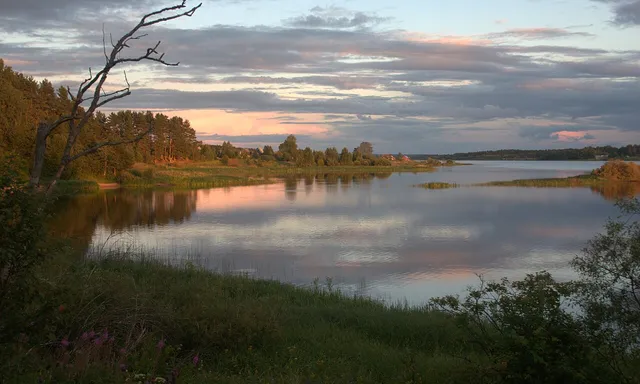
Lake Volgo is divided into two long reaches, Volgo-I and Volgo-II, joined by a channel near Bolshoye Lokhovo and Maloye Lokhovo. The water is about 2 metres deep on average, and the lake reaches 4 kilometres in width. Its southern shore is higher than the northern one; limestone is exposed in places along the higher banks, with springs emerging beneath it. These springs are called “boiling springs”, although their water stays at about 6°C throughout the year. The northern shore of Volgo-II is low and often flooded during high water. Near Kolobovo, Polki and Pochinok, the shoreline forms three broad bays; two more large bays indent the northern shore of Volgo-II, while Bely Plav Island rises near the lake’s centre.
Read more
Volgo is the last and lowest of the four Upper Volga lakes through which the upper Volga flows. The river enters from Lake Peno and leaves the lake near Selishche. About 5 kilometres below the outlet stands the Upper Volga Beyshlot, whose construction substantially changed the lake’s boundaries. Volgo was formerly about 7 kilometres long and up to 2 kilometres wide; it now stretches from the village of Volga in the west to Selishche in the east. The northern shore contains the multilayered archaeological sites of Podol III, Baranova Gora and Lanino I/8. Near the village of Lanino, Lanino I/8 dates to the Final Palaeolithic.
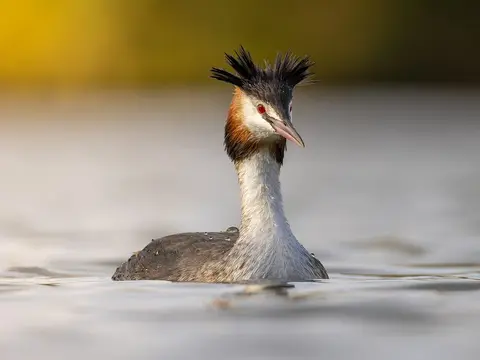
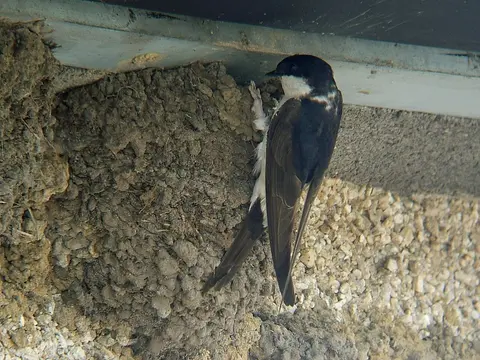
A great crested grebe and a western house-martin have been recorded nearby.
When there are more birds
Pick a month to see its birds
- Winter
- Spring
- Summer
- Autumn
Getting there
Directions on the map you prefer