Leaf warblers · Perching birds
Arctic Warbler
Link copied.
Phylloscopus borealis
Link copied.
How to recognize it
-
Body length 11.5–13.0 cm
-
Grey-green upperparts, pale underparts
-
One pale wing bar
About the species
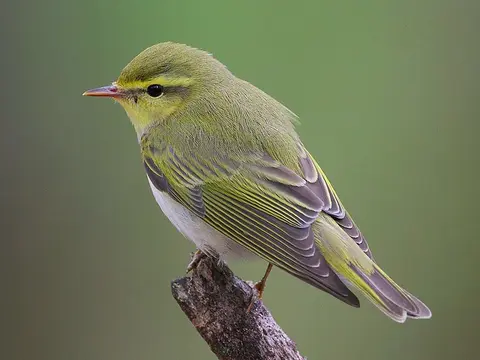
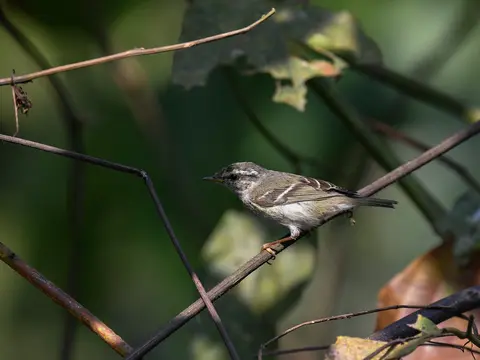
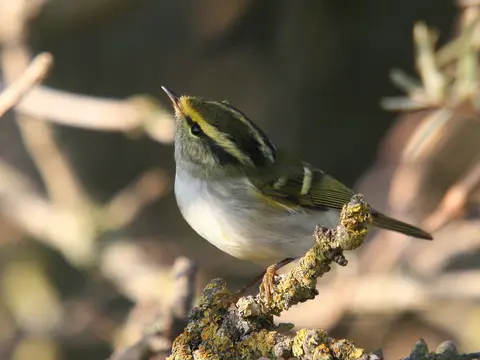
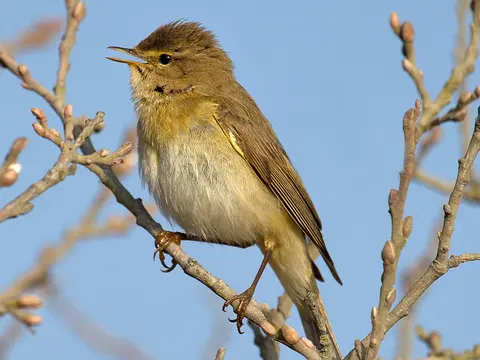
The back and crown are grey-green, set against off-white underparts. A single pale bar crosses each wing, while the long primary feathers project beyond the folded wing. Its pointed bill has a dark tip on the lower mandible, adding a small contrast to the otherwise muted coloring.
Its song is a fast trill, a quick, continuous run of notes. It nests on the ground in a low shrub, with the nest tucked below the surrounding branches.
During the breeding season, it uses birch and mixed birch woods near water across northern Eurasia and in Alaska, feeding on insects. It migrates to Asia for winter, making one of the longest journeys among Old World insect-eaters.
Where to find
-
In the breeding season, listen for a fast trill in birch or mixed birch woods near water.
-
Within those woods, look low beside shrubs: the nest is placed on the ground in a low shrub.
-
In autumn in western Europe, an encounter is unusual, though records are annual in Britain; listen for the fast trill.