Leaf warblers · Perching birds
Pallas's Leaf Warbler
Link copied.
Phylloscopus proregulus
Link copied.
How to recognize it
-
Body length 9–10 cm
-
Green upperparts, white underparts
-
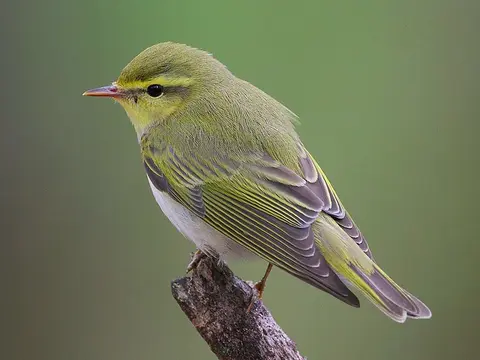
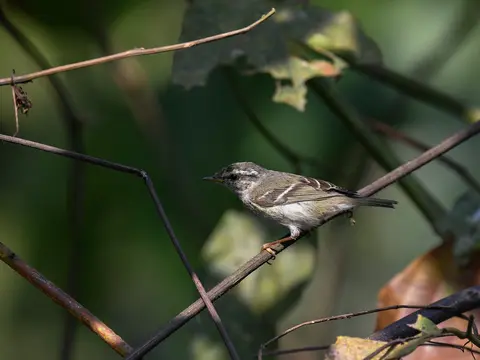
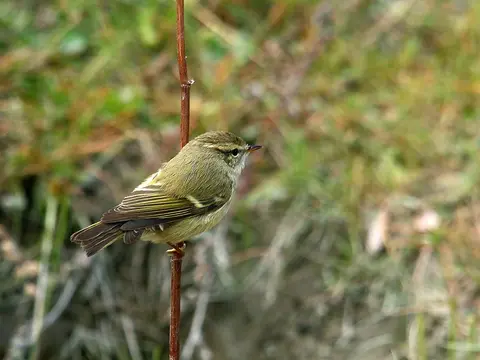
Yellow stripes above the eye and along the crown, two yellow wingbars; lemon-yellow rump most visible low in foliage or while hovering
-
Frequent brief hovers; soft call "dju-ee"
About the species
Green above and pale below, Pallas’s Leaf Warbler has a lemon-yellow patch at the base of its tail that flashes as it moves through foliage. Two yellow bars cross each wing, while bright yellow lines run over the eyes and along the crown. The rump is especially visible when it hovers or moves low among leaves.
It works constantly through trees and bushes, picking insects from leaves and making short flights or brief hovers. It may even hang upside down. Its song strings whistles and trills together, while the call is a soft, short “dju-ee.”
It breeds in coniferous and mixed forests across Siberia, northern Mongolia and northeast China, then migrates south for winter, mainly to southern China and nearby parts of Southeast Asia. In winter it also uses broadleaf woods and scrub, where it searches leaves for small insects and spiders. Increasing numbers have been turning up in Europe during autumn.
Where to find
-
During the breeding season in coniferous taiga, listen for the long, whistling song from a concealed perch near the top of a tall tree.
-
In autumn, encounters are regular in Europe; around shrubs and trees, watch for brief hovers during insect hunting.
-
In winter, look in broadleaf woods and scrub in river valleys of southern China, northern Thailand, and northeastern Indochina, where Pallas's Leaf Warbler searches for insects and may join mixed-species feeding flocks.