Plovers · Shorebirds
Black-bellied Plover
Link copied.
Pluvialis squatarola
Link copied.
Voice
Call
Call
Call
How to recognize it
-
27–30 cm long
-
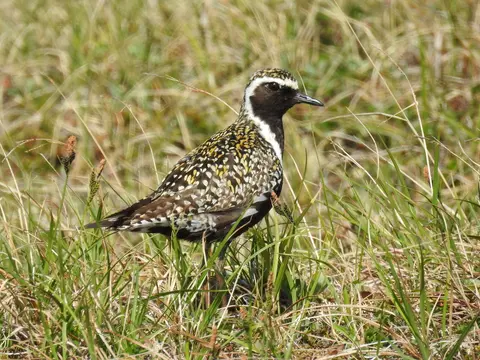
In spring, adult male: black underparts and sides of head, white crossbars on back
-
Black underwing visible in flight
-
Runs quickly, stopping abruptly to look around
About the species
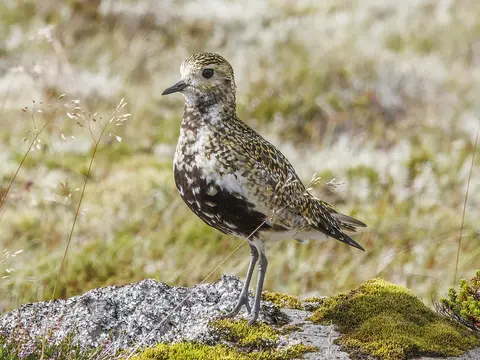
On winter shores, its plumage is mostly grey-brown above, with a pale, finely speckled breast and white belly. In spring, the face, chest and belly turn black, edged in white, while the back becomes patterned in black and white. Its dark bill and legs are easy to spot, and a white rump shows as it takes flight.
It runs quickly across open ground, stopping abruptly to look around before moving on to pick prey from the surface. Its plaintive, lilting call sounds like “too-lee, too-lee.” It feeds spread out along the shore, though it joins others in flocks to roost at high tide.
It breeds on open, dry Arctic tundra, then migrates to coastal wintering grounds across much of the world. On beaches and tidal flats, it searches by sight for worms, small molluscs, crustaceans and insects.
Where to find
-
On dry, open Arctic tundra during the breeding season, watch for quick runs broken by sudden stops as prey is picked from the ground, grass or moss.
-
Beside shallow tundra lakes, look for feeding at the water's surface or from the bottom.
-
On sea beaches and tidal flats during migration or winter, look for individuals feeding well spaced apart on small invertebrates, including those left in pools by the ebb.