Plovers · Shorebirds
Common Ringed Plover
Link copied.
Charadrius hiaticula
Link copied.
Voice
Call
Call
Song
How to recognize it
-
Adult length — 17–19.5 cm
-
Adults: gray-brown back and wings, white belly
-
Adults: black band across the white breast
-
Adults: white forehead, black eye mask; short orange-and-black bill, orange legs
About the species
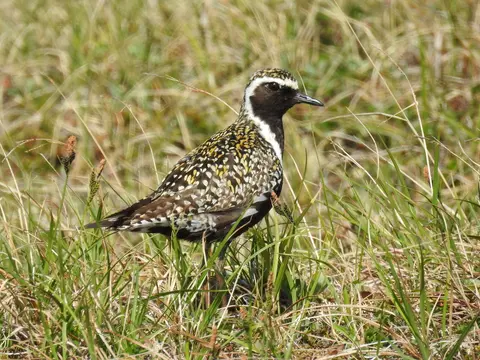
On open ground, its gray-brown back and wings contrast with a white belly and a single black band across the breast. A brown cap sits above a white forehead, while a black stripe crosses the eye; the short bill is orange at the base and black at the tip. In flight, a white band on the inner wing flashes into view.
It searches beaches and tidal flats by sight, sometimes trembling one foot to reveal prey. Its alarm call sounds like "kiii"; its breeding song goes "vitu-viu, kvitu-viu". When danger nears a nest, an adult may call and lead the intruder away, pretending to have a broken wing.
It breeds on open beaches, tidal flats and sparsely vegetated ground such as tundra, nesting directly on sand or pebbles. It feeds on insects, crustaceans and worms. Most migrate south to coastal wintering grounds as far as Africa, while some in Britain and northern France stay year-round.
Where to find
-
On sea beaches and muddy tidal flats, the Common Ringed Plover searches by sight for insects, small crustaceans and worms.
-
Along sandy or pebbly river and lake banks, watch it gather small molluscs, worms and crustaceans on the shallows.
-
At settlement edges, around dumps or timber-handling sites with open water nearby, adults may run from a ground nest, calling in alarm during the breeding season — keep your distance.