Plovers · Shorebirds
European Golden-Plover
Link copied.
Pluvialis apricaria
Link copied.
Voice
Call
Call
Call
How to recognize it
-
26–29 cm long
-
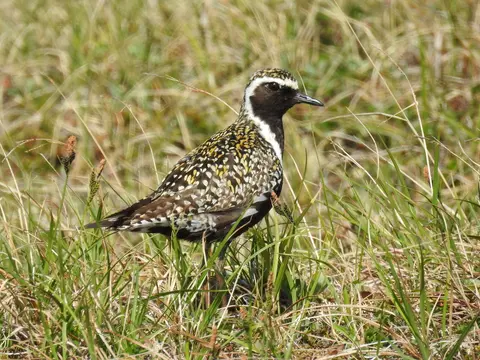
Round head, mottled grey-brown upperparts
-
In spring, male with black throat and belly edged in white
-
Fast, powerful flight with regular wingbeats
About the species
Its rounded head and gray-brown, mottled back contrast with a pale face and underside outside the breeding season. In spring, the male's throat and belly turn black, edged by a white line that runs from the forehead down the sides. Females darken below too, but with less contrast.
The call is a single, slightly falling "tuu." In spring, males sing on quick, powerful flights with regular wingbeats; if a predator approaches the nest, an adult runs away with repeated pauses to draw it off.
It breeds on open moors and tundra from Iceland east to central Siberia, then moves southwest for winter. Winter flocks feed in fields and short meadows, picking insects, worms, and snails from the ground, along with seeds and berries.
Where to find
-
In winter, scan open meadows and fields in western and southern Europe for flocks of European Golden-Plovers feeding on the ground.
-
During migration on sea coasts, watch them forage for crustaceans.
-
In spring, listen for males singing during display flights over open wetlands and tundra in northern regions.