Buntings · Perching birds
Black-headed Bunting
Link copied.
Emberiza melanocephala
Link copied.
Voice
Song
Song
How to recognize it
-
15–19 cm long
-
Adult male in breeding plumage: black head, bright yellow underparts and chestnut back
-
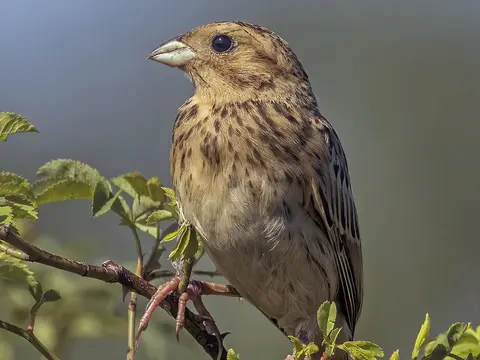
Breeding female and juveniles: dull grey-yellow plumage
-
Forages for seeds in open grassy areas, often in flocks
About the species
Breeding males have a black hood above bright yellow underparts, set off by a chestnut back. Their long tail extends beyond the body. Females and young are much duller, with grey-brown backs, greyish heads and pale yellow underparts.
They search grassland for seeds in flocks and build a cup nest in a low bush or sometimes on the ground. A quiet winter call is a single "tweet" or "zrit". In the breeding season, the song starts with high, harsh notes that speed into a jangling run, with clearer, slurred notes before stopping abruptly.
Open scrub, dry grassland and farmland provide breeding grounds from southeastern Europe east toward Iran. For winter, most move to India, with some reaching farther into Southeast Asia; there they feed in fields and grasslands. Seeds and grain are the usual food, while insects are also eaten when feeding young.
Where to find
-
In open scrub in southeastern Europe during the breeding season, look for flocks feeding on seeds among the grass.
-
In the North Caucasus steppe during the breeding season, look at ground level and in low bushes — nests are placed on the ground or low in vegetation.
-
In winter in India, scan thorny acacias for communal roosts of Black-headed Buntings, often alongside other species.